Software development for the education sector — NextAge

Technology for the education sector

Education is going digital fast, and your institution's technology needs to keep up. We develop and evolve educational platformswith managed teams and continuous delivery.

Education sector brands
that grew with us
Growth icon

FuturaED case
FuturaED logo

Publisher specialized in developing cultural works and teaching materials for basic education, working with both physical and digital media.

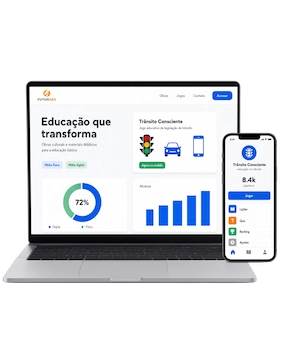
Reengineering of an educational game about traffic legislation. Migration from a legacy language to mobile, expanding the platform's reach and bringing traffic education to a new generation of users.

Services:
Software projects
Positivo Litthub Agraria Sicredi Coop Bom Jesus Vitu The Coffee Sanepar WEG Banco Bari Amfresh

Evolve your educational environments with NextAge

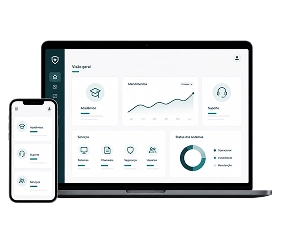
Systems that support the academic operation end to end

Academic portals

development and evolution of portals that centralize enrollment, grades, attendance, and communication between student, teacher, and institution.

Educational systems integration

connection between academic ERPs, distance learning platforms, CRMs, and financial systems.

Administrative management systems

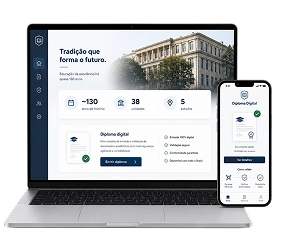
tailor-made platforms for the registrar's office, finance, and management of academic documents such as diplomas and certificates.

Modernization

reengineering of legacy systems with stack, architecture, and historical data migration without interrupting the operation.

Learning platforms

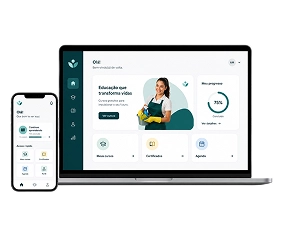
development of personalized virtual learning environments, with support for multimedia content, assessments, and knowledge tracks.

Support and continuous evolution

dedicated teams for maintenance, fixes, and evolution of the institution's systems.

NextAge education technology specialist

Education has already changed. Has your institution's technology kept up?

Advantages of developing with NextAge

Digital transformation across every area of your business

Icon

Higher student retention

Students can handle everything from their phone. A smooth digital journey is no longer a differentiator, it is the baseline.

Icon

Operational scale

Open new campuses, classes, or distance learning formats without multiplying the administrative team in the same proportion.

Icon

Focus on the future

Every modernized system builds the foundation to adopt AI, personalized teaching, and new learning formats.

Icon

Deliveries aligned with the academic calendar

Our management model respects your institution's cycles, such as entrance exams, enrollment, and the start of the semester.

Icon

More data

Dashboards and real-time metrics so leadership can spot risks before they turn into crises.

Icon

A partner that understands the sector

Educational institutions deal with regulatory oversight, seasonality, and students' growing expectations for digital experiences.

// ABOUT
NX

Why NextAge?

Learn our story →

Founded in 2007, NextAge was born to make software development more disruptive, human, and effective.

Innovation has always been at our core. We revolutionized the technology market with Staff Augmentation, our exclusive methodology that brings up to 40% more productivity to teams.

And we didn't stop there! We went further with NextFlow AI, a new way of developing that combines AI and human expertise in every line of code.

Today, we are the partner that transforms complexity into clarity and accelerates your operation with the best talent.

NextAge Office

Learn more

Want to learn more about how NextAge can help your business? Explore articles from our blog, testimonials from our clients, and our other services to drive your digital transformation the right way.

Loading content...

Questions and answers

How can a software development company help educational institutions?
A specialized company develops and modernizes academic systems, student portals, mobile apps, and integrations between platforms. This allows the institution to digitalize processes such as enrollment, document issuance, and financial management, gaining operational efficiency and improving the experience of students and staff.
What is digital transformation in education?
It is the process of replacing manual routines and outdated systems with integrated digital platforms that automate administrative operations, connect departments, and provide real-time data for decision-making. It ranges from digitalizing the registrar's office to adopting artificial intelligence for personalized teaching.
Which systems does an educational institution need in order to go digital?
The main ones are: an academic portal, an administrative management system (ERP), a distance learning platform (LMS), a mobile app for students and guardians, and BI tools for management dashboards. The most important thing is that these systems are integrated to avoid rework and duplicated data.
How does IT outsourcing work for the education sector?
The institution gets an external team of developers managed by a specialized company, without having to recruit, train, and retain technology professionals in-house. This model ensures stability, reduces the impact of turnover, and makes it possible to scale the team according to the demand of each academic term.
Is it possible to modernize a legacy academic system without losing historical data?
Yes. The modernization process includes stack and architecture migration with full preservation of the existing database. Institutions with decades of stored academic information are able to migrate to current technologies while keeping the entire history of students, grades, documents, and financial records.
How can artificial intelligence reduce student dropout?
Predictive AI models analyze data such as attendance, assessment performance, platform engagement, and payment history to identify students at high risk of dropping out. With these early alerts, the institution can intervene with personalized actions before the student completes the cancellation.
How long does it take to develop an app for an educational institution?
It depends on complexity. An app with essential features (grades, invoices, calendar, and announcements) can be delivered in sprints starting from 3 to 12 weeks. More robust projects with gamification, distance learning content, and integration with multiple systems can take 4 to 8 months.
What is the difference between traditional IT outsourcing and the managed teams model?
In traditional outsourcing, the institution receives allocated professionals and takes on the management. In the managed teams model, the partner company is responsible for management, quality metrics, documentation, and professional replacement. This eliminates turnover risk and ensures continuity even when the team changes.
How do you ensure technology deliveries respect the academic calendar?
With a management methodology driven by sprints and milestones aligned to the institution's critical periods: entrance exams, enrollment, the start of the semester, and submitting reports to education regulators. Planning accounts for these seasonal peaks so that no delivery is delayed during moments of high operational demand.
Why should educational institutions invest in digital transformation now?
Because students' expectations for digital experiences grow every year, competition between institutions is intensifying, and regulatory requirements demand more and more traceability and automation. Institutions that postpone digitalization accumulate technical debt, lose competitiveness in student recruitment, and operate with higher administrative costs than necessary.

Your institution's digital transformation doesn't have to be complex. It needs the right partner.