
Company specialized in Java:
expert outsourcing,
maintenance and modernization
NextAge takes over Java systems already in production. We handle maintenance, version migration and modernization of legacy applications, with our own team and an SLA defined in the contract.
What does a Java
development company deliver?
See the types of projects NextAge delivers with a dedicated squad, fixed scope and guaranteed SLA. Understand when Java is the most solid technical choice for your roadmap.

Back-end development
Java is one of the leading languages for scalable, high-performance back-end development. NextAge designs robust architectures for web and mobile applications, with efficient integrations and a structure ready to grow with the business.
Technologies: Spring Boot, Spring MVC, Hibernate, JPA, PostgreSQL, MongoDB, Redis
API creation and integration
RESTful APIs built in Java for system integration, communication with third-party services and secure data exposure. NextAge ensures proper versioning, robust authentication and consistent performance on every endpoint delivered.
Technologies: Spring Boot REST, Swagger/OpenAPI, OAuth2, JWT, GraphQL, API Gateway
Web applications
Java makes it possible to build complete web applications, combining a robust back-end with modern front-ends. NextAge delivers responsive, secure and easy-to-maintain applications, bringing together the Java ecosystem and the leading UI frameworks on the market.
Technologies: Spring Boot, Thymeleaf, JSF, Angular/React/Vue.js integration, Bootstrap
Legacy system modernization
Old monolithic Java systems can be migrated to modern architectures without interrupting operations. NextAge carries out version migrations, incremental refactoring, upgrades of obsolete frameworks and cloud infrastructure adoption with controlled risk and full predictability.
Technologies: Modern Spring Framework, Docker containerization, cloud migration, incremental refactoring
Data processing
Java is widely used in solutions for processing, migrating and analyzing large volumes of data. NextAge builds robust pipelines and integrations with BI tools to turn raw data into input for strategic decisions.
Technologies: Spring Batch, Apache Kafka, Apache Spark, Elasticsearch, BI tool integrations
Enterprise system integration
Java is an established choice for integrating heterogeneous systems in enterprise environments. NextAge connects diverse platforms, orchestrates business processes and synchronizes data across systems with unified, traceable flows.
Technologies: Apache Camel, Spring Integration, ESB (Enterprise Service Bus), message brokers, SOAP/REST web services
… and whatever else it takes for your digital transformation to happen now.
NextAge + Java solutions
Proprietary methodologies and specialized services to maximize results in your Java projects
Staff Augmentation
Allocation of specialist Java teams. Unlike traditional outsourcing, you get senior developers, Java architects, tech leads and QAs focused on automated testing, all managed by us. We guarantee continuous code review and enterprise Java architecture standards.
Choose it to scale Java teams without the risks of traditional staffing

Get the best Java
developers on your project
Hundreds of Java projects delivered
We have a solid Java portfolio. Everything you need for software at the highest technical and strategic level.




We evolved the import and export management system with improvements and new features, including integration with the Central Bank APIs and data recovery. Core in Java and Spring Boot, reinforcing business rules and performance. The result was more agile processes and decisions and more reliable data.
Want results like these in your company?
What sets our Java
developers apart?
→ The differentials that made NextAge the number 1 choice of market leaders
Validated professionals
Our team is rigorously trained and validated before joining the project. You work with professionals who have already solved complex problems similar to yours.
Learning curve
Unlike traditional staffing, our teams are actively managed by us. Tech leads monitor developer performance and alignment with your goals, accelerating the learning curve.
Quality and testing culture
AI-powered automated testing, code review and CI/CD are part of our DNA. We deliver tested, production-ready code, reducing bugs and rework.
More agility
We adopt truly agile methodologies. Well-planned sprints, incremental deliveries and transparent communication. You follow progress in real time.
Knowledge as a foundation
Our Java developers also have experience with databases (PostgreSQL, Oracle, MongoDB), cloud (AWS, Azure), DevOps and front-end integration (Angular, React, Vue.js). A complete view of the ecosystem.
Cultural alignment
Our teams understand the context and culture of companies. Clear communication, productive meetings and natural alignment with technical and business stakeholders.

Why NextAge?
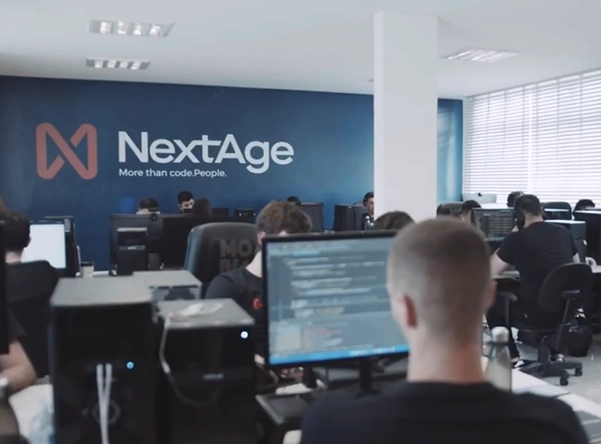
Founded in 2007, NextAge was born to make software development more disruptive, human, and effective.
Innovation has always been at our core. We revolutionized the technology market with Staff Augmentation, our exclusive methodology that brings up to 40% more productivity to teams.
And we didn't stop there! We went further with NextFlow AI, a new way of developing that combines AI and human expertise in every line of code.
Today, we are the partner that transforms complexity into clarity and accelerates your operation with the best talent.
Learn more →
Want to understand more about how NextAge can help your business? Explore articles from our blog, testimonials from our clients and our other services to carry out your digital transformation in the best way.
Loading content...
Questions and answers
What are the risks of running Java 8 or Java 11 in production today?
Does Java 8 still receive security fixes?
Does an outdated Java version fail a security audit?
My vendor says my system's Java cannot be upgraded. Is that true?
How do I find out which Java version my systems are running?
java -version on the application servers. For environments with multiple services, observability tools such as New Relic, Dynatrace or Datadog identify the runtime version of every running application. For legacy systems without monitoring, the mapping requires server access and analysis of the deployment artifacts. NextAge performs this diagnosis as part of the onboarding process in any maintenance or migration project.