
Company specialized
in Angular
We build and scale Angular applications with a proprietary, data-driven methodology that eliminates rework and guarantees roadmap predictability.
What does an Angular
development company deliver?
See the types of projects NextAge delivers with a dedicated squad, fixed scope and guaranteed SLA. Understand when Angular is the most solid technical choice for your roadmap.


Enterprise web applications (SPA)
Angular is the reference framework for robust, highly complex Single Page Applications, with an opinionated structure that keeps large teams consistent. NextAge designs scalable applications with a modular architecture and performance optimized for business-critical operations.
Technologies: Angular (LTS versions), TypeScript, RxJS, NgRx, Angular Router, Angular Universal
Enterprise systems and portals
Angular is widely adopted in internal systems, corporate portals and platforms with complex business rules, thanks to its strongly typed, testable structure. NextAge delivers secure, easy-to-maintain systems ready to evolve alongside multiple development teams.
Technologies: Angular Modules, Dependency Injection, Reactive Forms, Angular Material, NgRx
Design Systems and component libraries
Angular makes it possible to build reusable component libraries and design systems that stay consistent across products and squads. NextAge structures scalable component libraries, with clear documentation and visual standards that speed up the development of new features.
Technologies: Angular CLI, Angular Material, Storybook, Nx (monorepos), Sass/SCSS
API and back-end integration
Angular consumes and integrates REST and GraphQL APIs in a structured way, guaranteeing secure, high-performance communication between front-end and back-end. NextAge implements well-defined service layers, consistent error handling and robust authentication in every integration.
Technologies: HttpClient, RxJS Observables, JWT/OAuth2, GraphQL (Apollo Angular), Interceptors
Version modernization and migration
Legacy Angular or AngularJS applications can be migrated to modern versions without interrupting operations. NextAge performs incremental version upgrades, AngularJS-to-Angular migration, architecture refactoring and dependency updates with controlled risk and full predictability.
Technologies: Angular Update Guide, ngUpgrade, incremental refactoring, Standalone Components, Docker containerization
Dashboards and data visualization
Angular is a solid choice for interactive dashboards and internal BI tools, combining rendering performance with rich visualization components. NextAge builds data-driven interfaces that turn complex data into fast business decisions.
Technologies: Angular, D3.js, Chart.js/ngx-charts, RxJS, BI API integration
… and whatever else it takes for your digital transformation to happen now.
NextAge + Angular solutions
Proprietary methodologies and specialized services to maximize results in your Angular projects
Staff Augmentation
Allocation of specialist Angular teams. Unlike the traditional model, you get senior developers, front-end architects, tech leads and QAs focused on automated testing, all managed by us. We guarantee continuous code review and enterprise Angular architecture standards.
Choose it to scale Angular teams without the risks of traditional staffing

Get the best Angular
developers on your project
Hundreds of Angular projects delivered
We have a solid Angular portfolio. Everything you need for software at the highest technical and strategic level.


Ongoing evolution of a logistics system for import/export (freight, customs, taxes), built on a Java, Spring Boot and Angular stack. We delivered integration with Brazil's Central Bank APIs for currency conversion, batch data recovery and new reports and features.


Want results like these in your company?
What sets our Angular
developers apart?
→ The differentials that made NextAge the number 1 choice of market leaders
Validated professionals
Our team is rigorously trained and validated before joining the project. You work with professionals who have already solved complex problems similar to yours.
Learning curve
Unlike traditional staffing, our teams are actively managed by us. Tech leads monitor developer performance and alignment with your goals, accelerating the learning curve.
Quality and testing culture
AI-powered automated testing, code review and CI/CD are part of our DNA. We deliver tested, production-ready code, reducing bugs and rework.
More agility
We adopt truly agile methodologies. Well-planned sprints, incremental deliveries and transparent communication. You follow progress in real time.
Knowledge as a foundation
Our Angular developers master TypeScript, state management (NgRx, RxJS), automated testing, cloud (AWS, Azure) and back-end integration (Java, .NET, Node.js). A complete view of the ecosystem.
Cultural alignment
Our teams understand the context and culture of companies. Clear communication, productive meetings and natural alignment with technical and business stakeholders.

Why NextAge?
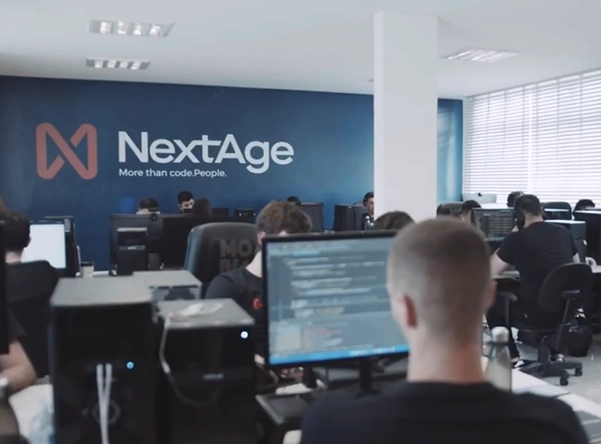
Founded in 2007, NextAge was born to make software development more disruptive, human, and effective.
Innovation has always been at our core. We revolutionized the technology market with Staff Augmentation, our exclusive methodology that brings up to 40% more productivity to teams.
And we didn't stop there! We went further with NextFlow AI, a new way of developing that combines AI and human expertise in every line of code.
Today, we are the partner that transforms complexity into clarity and accelerates your operation with the best talent.
Learn more →
Want to understand more about how NextAge can help your business? Explore articles from our blog, testimonials from our clients and our other services to carry out your digital transformation in the best way.
Loading content...
Questions and answers
Is it worth migrating from NgModules to Standalone Components?
ng generate @angular/core:standalone schematic, without breaking the application in production. NextAge runs this migration gradually, validating each module before moving on to the next.RxJS or Signals for state management in Angular?
Does NgRx still make sense or is it overengineering?
Does Angular Universal (SSR) solve SEO problems in an SPA?
@angular/ssr in recent versions) solves content indexing by crawlers, since it delivers server-rendered HTML. But on its own it doesn't solve every technical SEO factor — dynamic meta tags, structured data and Core Web Vitals still need to be configured correctly in the implementation.What is the real performance gain from migrating from Angular 10 to recent versions?
Is it safe to upgrade an Angular major version in production without breaking the application?
ng update) with automated test coverage before each upgrade. Skipping versions directly (e.g. Angular 10 to Angular 17) increases the risk of unmapped breaking changes. NextAge uses the official Angular Update Guide and runs regression test suites for every migrated version.Micro-frontends with Angular: Module Federation or Nx?
How do you ensure accessibility (WCAG) in an Angular application without rewriting everything?
FocusTrap, LiveAnnouncer and keyboard focus management, which can be adopted incrementally in existing components. A prior technical audit identifies the critical non-compliance points before deciding between targeted fixes or refactoring specific components.Is a zoneless Angular application viable in production?
How do you identify memory leaks in a long-running Angular application?
takeUntilDestroyed() or the async pipe in the template) and event listeners not removed in ngOnDestroy(). The investigation involves profiling with Chrome DevTools (Memory tab) to find components that aren't garbage collected after being destroyed. This kind of diagnosis is part of the technical analysis NextAge performs in code audits.