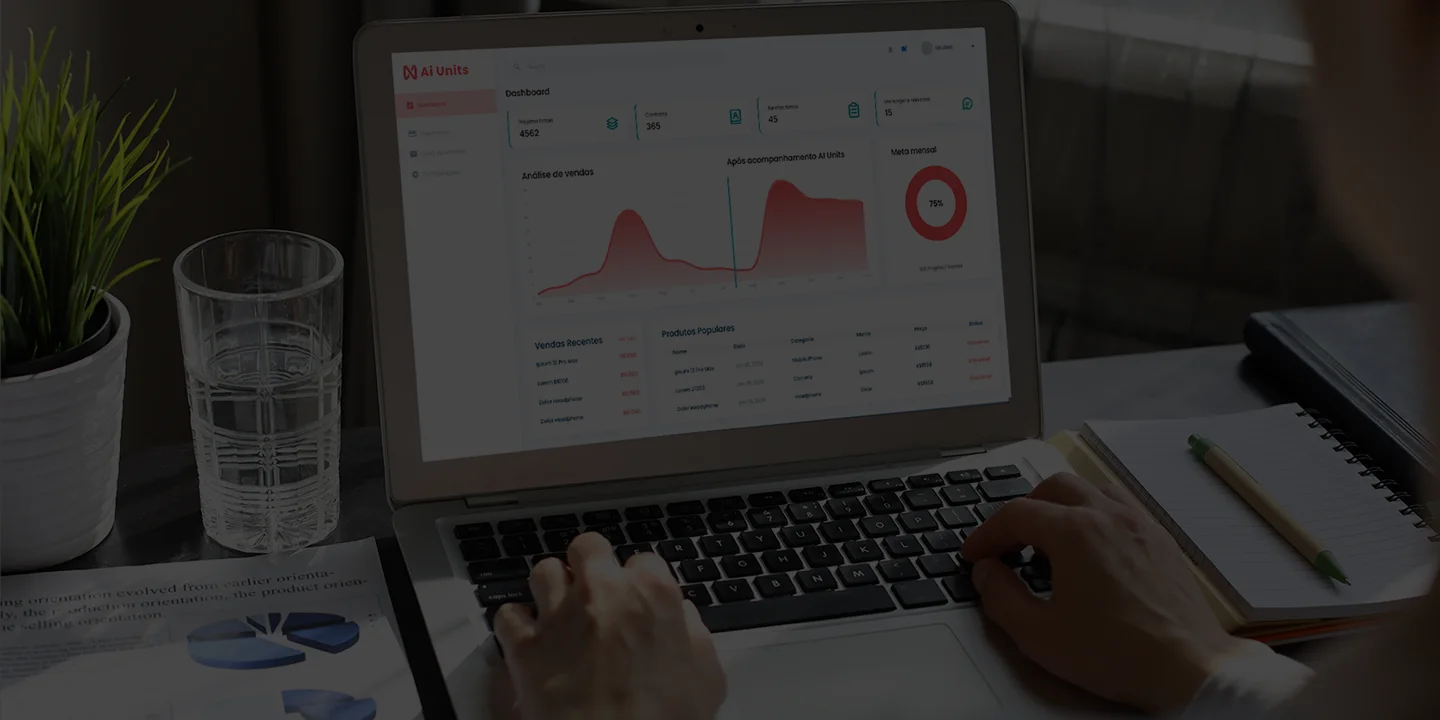
Project tracking dashboard in a workspace, showing sales analytics and goals

AI Delivery Units

AI that reaches production. Not just the demo.

AI Delivery Units do the heavy lifting, supervised by NextAge experts: documented, tested, built to enterprise standards. You pay for the result, not by the hour or per seat.

See the Units catalog

What is your goal?

What is an AI Delivery Unit?

What changes when you stop paying for hours and start paying for results? Everything.

An AI Delivery Unit is a delivery unit with a closed scope and four named deliverables. Software engineering, product definition, design, testing or support: you choose the result, and the Unit gets to work.

NextAge specialists gathered around laptops Professional analyzing data dashboards on a monitor

AI agents handle research, planning and implementation. NextAge senior professionals supervise every step and only release what passes the quality gates. Activation takes days, not months.

More speed and lower operating costs. A commitment to deliveries, not to allocated hours.

If you've ever said any of these sentences, AI Delivery Units was built for you

Mockup notebook

"I hired a company, paid by the hour, and in the end I couldn't really track what was actually delivered."

Tech Company CEO

"We have the demand, but we don't have the team to build it all right now."

IT Manager

"I've used AI at the edges, but I still feel the whole cycle could be much faster."

Tech Lead

Which AI Delivery Units can I hire?

There are 26 Units across six categories. Each one delivers four concrete artifacts. Combine the ones that fit your goal and build your proposal.

Innovation

Product Discovery

Find out what is worth building before you spend the first sprint.

  • Opportunity map prioritized by impact and effort
  • Personas and journeys validated in user interviews
  • Value hypotheses with defined success metrics
  • MVP roadmap with scope, risks and assumptions
Innovation

Agentic Prototype

Your idea becomes a clickable prototype with AI agents that actually work.

  • Working prototype with the main flows clickable
  • Agents configured with versioned prompts and tools
  • Demo script with validated use cases
  • Technical feasibility report with estimated token cost
Innovation

AI Prototype Assessment

Find out whether the prototype you already have can go to production.

  • Architecture, security and code quality diagnosis
  • Technical debt list prioritized from P1 to P4
  • Gap matrix between the prototype and enterprise standards
  • Recommendation to productize, refactor or rebuild, with an estimate
Delivery

Build E2E

Your digital product from zero to launch: defined, built and tested.

  • Prioritized backlog with acceptance criteria
  • Versioned source code with a CI/CD pipeline
  • Automated test suite with a coverage report
  • Technical documentation and deployment runbook
Delivery

Continuous Product Delivery

New features in production every cycle, without losing pace.

  • Increments shipped every cycle with release notes
  • Deployment pipeline with automated rollback
  • DORA metrics dashboard: frequency, lead time and failure rate
  • Cycle review with a reprioritized backlog
Delivery

API Launch

A documented, secure API that partners can start consuming.

  • Versioned OpenAPI contract
  • Authentication, rate limiting and logging configured
  • Contract and load tests with a report
  • Documentation portal with usage examples
Delivery

Marketing Campaign

Microsites and WhatsApp flows live within the campaign deadline.

  • Responsive microsite with tracking tags configured
  • WhatsApp conversational flow with a journey map
  • Lead integration with your CRM
  • Load and compatibility test report
Delivery

AI Prototype Productization

The improvised prototype becomes an enterprise product, keeping everything already validated.

  • Functional specification extracted from the running prototype
  • Data schemas and contracts inferred from real usage
  • Behavior and edge-case catalog covered by tests
  • Refactored product with security, observability and CI/CD
Enablement

Product Definition

Clear requirements before the first line of code.

  • Functional and non-functional requirements document
  • Story map organized by journey
  • Prioritized backlog with estimates
  • Domain glossary and business rules
Enablement

Story Refinement

Stories ready for development, without back and forth.

  • Stories in Given/When/Then format with DoR and DoD
  • Testable acceptance criteria per scenario
  • Dependencies and risks mapped per story
  • Complexity estimates with rationale
Enablement

Software Architecture

Architecture decisions recorded, justified and ready to scale.

  • ADRs with alternatives and consequences
  • C4 context, container and component diagrams
  • Quantified quality requirements: performance, availability and security
  • Evolution plan with technical risks
Enablement

UX Design

Flows and screens users understand the first time.

  • User flows mapped per persona
  • Wireframes and high-fidelity prototype
  • Design system with documented components and tokens
  • Usability test report with recommendations
Enablement

Web Development

Front end and back end generated from the approved design and architecture.

  • Front-end and back-end code reviewed by experts
  • Unit and integration tests in the pipeline
  • Accessibility and performance checklist met
  • Pull requests documented with the context of each change
Enablement

Test Strategy and Design

Know what to test, how and when, before the bug shows up.

  • Risk-based test plan
  • Test cases traced to requirements
  • Coverage matrix per feature
  • Entry and exit criteria per environment
Enablement

Test Automation

Automated regression running on every change.

  • Automated functional and API test suite
  • Performance tests with a recorded baseline
  • Execution integrated into the CI pipeline
  • Results report with failure analysis
Enablement

Shift-Left Quality

Quality from refinement onward, not just at the end of the cycle.

  • Requirements review with defects flagged before coding
  • Quality gates defined in the pipeline
  • Static analysis configured with the project rules
  • Quality indicators dashboard per cycle
Modernization

Legacy Assessment

An honest map of your legacy system and the path to modernize it.

  • Inventory of modules, dependencies and integrations
  • Code archaeology with documented business rules
  • Technical and business risk matrix per module
  • Modernization roadmap in waves, with estimates
Modernization

Monolith Decomposition

From monolith to independent services, without stopping operations.

  • Domain map and bounded contexts
  • Incremental extraction plan using the strangler fig pattern
  • Extracted services with contracts and tests
  • Data and synchronization strategy during the transition
Modernization

Stack Modernization

Up-to-date versions and frameworks, with behavior preserved.

  • Diagnosis of versions and vulnerabilities in the current stack
  • Migrated code with behavior regression tests
  • Updated build and deployment pipeline
  • Compatibility report and points of attention
Modernization

Database Migration to Cloud

Your data in the cloud with validated integrity and a way back.

  • Versioned migration scripts with rollback
  • Schema and type mapping between source and target
  • Integrity validation with record reconciliation
  • Cutover plan with a window and rollback criteria
Stability

AMS E2E

Systems sustained with SLAs, monitoring and continuous improvement.

  • Incident handling with an agreed SLA
  • Monitoring and alerts configured
  • Monthly report of incidents, root causes and trends
  • Prioritized backlog of preventive improvements
Stability

Bug Fixing

Bugs fixed at the root cause, not patched over.

  • Fixes with an associated regression test
  • Root cause analysis per defect
  • Bug backlog triage by severity
  • Release notes for the delivered fixes
Stability

Secure Code Review

Vulnerabilities found before they reach production.

  • Findings report prioritized from P1 to P4
  • Findings mapped against the OWASP Top 10
  • Suggested fixes with code examples
  • Static analysis rules tuned to the project
Stability

Application Pentest

Simulated attacks to find where your application gives way.

  • Agreed test plan and scope
  • Technical report with evidence and severity
  • Executive summary for leadership
  • Retest of fixes with a final opinion
Platforms

Systems Integration

ERP, CRM and payment providers talking to each other, with no manual rework.

  • Integration map with data flows
  • Connectors with error handling and reprocessing
  • Queue and failure monitoring
  • Contract and operations documentation
Platforms

Mobile App

Your iOS and Android app published in the stores.

  • App published on the App Store and Google Play
  • Screens and flows validated with users
  • Back-end integration and push notifications
  • Real-device testing with a report

Not sure where to start? A specialist will put together the right combination for your company →

How does an AI Delivery Unit work?

Simple for you, rigorous inside. Four steps from first contact to delivery in production.

  1. 01

    Guided discovery

    A NextAge specialist understands your goal and recommends the right Units and plan.

  2. 02

    Agentic execution

    Once your subscription is active, AI agents take care of research, planning and implementation, end to end.

  3. 03

    Expert supervision

    NextAge senior professionals review every step. Nothing moves forward without passing the corresponding review.

  4. 04

    Compounding knowledge

    Every supervised cycle becomes a pattern, a validation and a reusable playbook in your context. The Unit gets faster and more accurate with every delivery.

How does token-based pricing work?

One subscription, three plans. Each plan includes a monthly amount of tokens, and each token is a traceable action of your Unit. You track consumption and pay for what was produced.

Essential

For pilots and smaller projects

On request

  • Combinable Units across up to 5 concurrent projects
  • Standard expert supervision
  • Enterprise-grade security
  • Data storage: on request
  • WhatsApp and email notifications

Production

For production workloads

On request

  • Combinable Units across up to 50 concurrent projects
  • Priority expert supervision
  • Enterprise-grade security
  • Data storage: on request
  • WhatsApp and email notifications
  • Token vault: isolated balance, with limits and reports per project

Scale

For large-scale operations

On request

  • Combinable Units across unlimited projects
  • 24/7 expert supervision
  • Enterprise-grade security
  • Data storage: custom
  • WhatsApp and email notifications
  • Token vault
  • Model training on your company data
  • Early access to new capabilities

What is the difference between vibe coding and AI engineering?

Anyone can write a prompt. Not everyone can deliver.

Getting a demo out of an AI is easy. Turning it into a secure, documented system that follows your company's standards, every single time, is engineering.

Vibe coding

Improvised

  • Prompt after prompt, hoping it works
  • A different result on every run
  • Standards left to chance
  • You inherit the risk, the fixes and the rework
  • Hidden cost in people's hours and wasted tokens
  • A prototype that still has to be rebuilt

AI Delivery Units

Engineered

  • Repeatable processes written in code
  • The same result, every time
  • Brand, security and coding standards built into the process
  • NextAge takes ownership of the delivery
  • Fewer tokens, with expert supervision
  • A production system for you to evolve

What does it really cost to build software with AI?

Tokens
Human rework to reach production
Real cost

The tool's invoice only shows the tokens. The second cost, your team's hours fixing, testing and documenting what the AI generated, never shows up on it and is usually the larger one. Units already deliver at production standard, so that cost drops out of the equation.

Security and quality built in

Is an AI Delivery Unit secure?

Units were designed for corporate environments from day one. Guardrails, observability and output validation are included and enforced on every delivery.

Guardrails

Usage policies, role-based permissions and approval flows define what each agent can do.

Agent observability

Real-time tracing of every action and alerts when something goes off track.

Output validation

Every delivery is checked against quality and compliance rules before it reaches you.

Compliance and audit

Data handling aligned with the LGPD, Brazil's data protection law, and a complete audit trail of every action.

Agent governance runs on NX Router, the NextAge layer that orchestrates, monitors and audits AI agents in production.

Why choose NextAge for AI Delivery Units?

Our history →
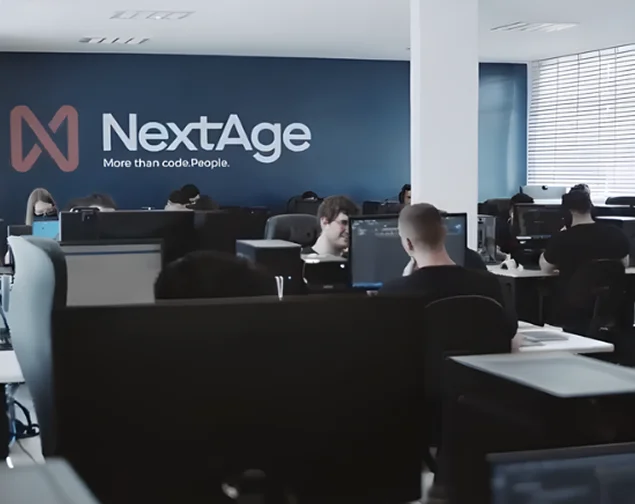
NextAge team working at the office with the logo on the wall

NextAge was founded in 2007 with one goal: to make software development more disruptive, human, and effective.

Innovation has always been in our DNA. We shook up the tech industry with the new Staff Augmentation, our proprietary methodology that drives up to 40% more productivity across teams.

Then we pushed even further with NextFlow AI, a new approach to development that combines AI and human expertise into every line of code.

Today we have around 150 professionals and more than 600 projects delivered in 13 countries. We're the partner that turns complexity into clarity and accelerates your business with the best talent out there.

Why pay for results instead of hours?

We don't sell hours, we sell results. AI Delivery Units were built for tech leaders who need speed, predictability, and quality, all at once.

Talk to one of our specialists and find out how this model can be configured for your context.

Professional in front of monitors with AI visualizations and code

// Companies that trust NextAge

Banco Bari Senff XP Andrade Gutierrez Camargo Corrêa Munters Pado Rumo The Coffee Batavo WEG Scania Agraria Cresol Sicredi Coop Bom Jesus Litthub OEC Positivo Sanepar Amfresh Vapza Vitu

What do you get with AI Delivery Units?

AI icon

Powered by AI

AI Units use AI agents trained across the entire development cycle (engineering, UX, QA, and more). They go beyond execution: they learn the context of your project to operate with precision.

Verification icon

NextAge Verification

Every output must pass NextAge's quality and security standards before it reaches you. Rigorous validation protocols ensure that what's delivered is reliable, tested, and production-ready.

Activation icon

No bureaucracy

No long onboarding, no ramp-up. Your Unit is activated in days, with professionals already aligned to your context and ready to deliver from the very first cycle.

Learn more

Want to see how AI engineering works in practice? Read our blog articles.

Is AI-Generated Code Secure? What Copilot, ChatGPT, and Cursor Aren’t Telling You

Is AI-Generated Code Secure? What Copilot, ChatGPT, and Cursor Aren’t Telling You

Artificial intelligence has changed how fast development teams ship software. What hasn’t changed at the same pace is the security of what’s actu...

Innovation
Read more
Developer Outsourcing: The Complete Guide to Scaling Your IT Team

Developer Outsourcing: The Complete Guide to Scaling Your IT Team

The Brazilian technology market has never been bigger. According to the ABES study in partnership with IDC, the sector reached US$ 67.8 billion i...

Innovation
Read more
Top AI Frameworks in 2026: A Critical Review

Top AI Frameworks in 2026: A Critical Review

The global agentic AI market is set to grow 25 times over the next few years: from US$ 7.9 billion in 2025 to US$ 196 billion by 2030, according ...

Review
Read more

Frequently asked questions about AI Delivery Units

What is an AI Delivery Unit?
It is a delivery unit with a closed scope: AI agents handle research, planning and implementation, and NextAge senior professionals supervise every step. Each Unit has four named deliverables, such as ADRs, test suites or migration scripts, and you pay for tokens consumed, not by the hour.
How do I choose the right Units?
Start from the result you want: build a product, launch a digital service, take a prototype to production or modernize a legacy system. Filter the catalog, add the Units that make sense and click Build proposal. A NextAge specialist reviews the combination with you and recommends the right plan.
How does token-based pricing work?
You subscribe to a monthly plan with a defined number of tokens. Each token corresponds to a traceable action performed by your Unit. You track consumption and pay for what was produced, not for allocated hours or seats.
What is a token?
It is the consumption unit of the model: each traceable action your Unit performs within the project. This gives you transparency over what was delivered and how resources were used.
What is the difference between the Essential, Production and Scale plans?
Essential covers pilots and smaller projects, with up to 5 concurrent projects and standard supervision. Production supports up to 50 projects, priority supervision and a token vault. Scale unlocks unlimited projects, 24/7 supervision, model training on your company data and early access to new capabilities. Pricing is available on request.
What happens during the pilot?
We pick one or two Units and a small scope, and define the success criteria before we start. You follow every quality gate and approve, iterate or discard each artifact. At the end, you decide based on the agreed criteria: expand, adjust or stop.
What are quality gates?
They are checkpoints between the steps of a Unit. A NextAge specialist checks the agents' output against defined criteria, such as test coverage, architecture compliance and security, before releasing the next step.
Can I scale my Unit up or down?
Yes. You add Units or change plans when demand grows and scale down when you need to, without being locked into a fixed size.
What happens when the tokens run out?
You can renew the subscription, add tokens or change plans. Nothing beyond what you contracted is charged without your approval.
Is my data safe?
Yes. Units operate with guardrails, role-based permissions and approval flows, and every delivery is validated against quality and compliance rules. Data handling follows the LGPD (Brazil's data protection law) and every action is recorded in an audit trail.
Where do I start?
Build your combination in the catalog or talk to a specialist. We assess your context, recommend the Units and the plan, and activation takes days, with no long onboarding.

Looking for other ways to work with NextAge? See Software Projects, Quality Center, Application Managed Services and Staff Augmentation 2.0.