 English
  Português
Industry 4.0 is the set of advanced digital technologies (IoT, artificial intelligence, big data, cloud computing, and robotics) that is transforming manufacturing by integrating the physical and digital worlds, creating smart factories capable of operating with greater autonomy, efficiency, and market responsiveness.
The term was coined in 2011 at the Hannover Messe trade fair, as part of a strategic initiative by the German government to modernize the manufacturing sector through digitalization. Since then, the concept has spread worldwide and become the benchmark for any industry seeking competitiveness in today’s landscape. In Brazil, the Industry 4.0 market reached US$ 1.77 billion in 2022 and is projected to reach US$ 5.62 billion by 2028, with a compound annual growth rate of 21%, according to data from the Industry 4.0 Monitor published by the Brazilian National Confederation of Industry (CNI), based on research by IMARC.
In this guide, you will understand what drives this transformation, what its technology pillars are, how Brazilian manufacturing is positioning itself, and, most importantly, the practical steps to start or accelerate this journey in your own operation.
From the steam engine to the smart factory: the four industrial revolutions
The history of industry can be told in four major leaps. The first took place in the late 18th century, with the steam engine and the mechanization of processes that previously depended on manual labor or animal power. The second came at the end of the 19th century, when electricity enabled mass production and the creation of assembly lines, a model that Henry Ford popularized in the automotive industry.
The third leap began in the 1970s and 1980s, with the arrival of computers, programmable logic controllers (PLCs), and the automation of repetitive tasks. This was when factories began operating with programmed machines, significantly reducing the dependence on human intervention in standardized processes.
The fourth industrial revolution, which we are experiencing now, is not merely an evolution of automation: it is a paradigm shift. The fundamental difference lies in the ability of machines, systems, and people to communicate in real time, make data-driven decisions, and learn continuously. While in previous revolutions it took decades for a technology to become standard, today that cycle shrinks to just a few years.
| Revolution | Period | Technological milestone |
|---|---|---|
| 1st | Late 18th century | Steam engine, mechanization |
| 2nd | Late 19th century | Electricity, mass production |
| 3rd | 1970s–1980s | Computers, programmable automation |
| 4th | 2011 onward | IoT, AI, Big Data, smart factories |
The 9 technology pillars of Industry 4.0
The foundation of Industry 4.0 rests on nine technology pillars, as outlined in the framework developed by the Boston Consulting Group. Each one serves a specific function, but the real potential emerges when they are used in combination. Below is a practical overview of each pillar, with examples applicable to manufacturing.
1. Autonomous and collaborative robots
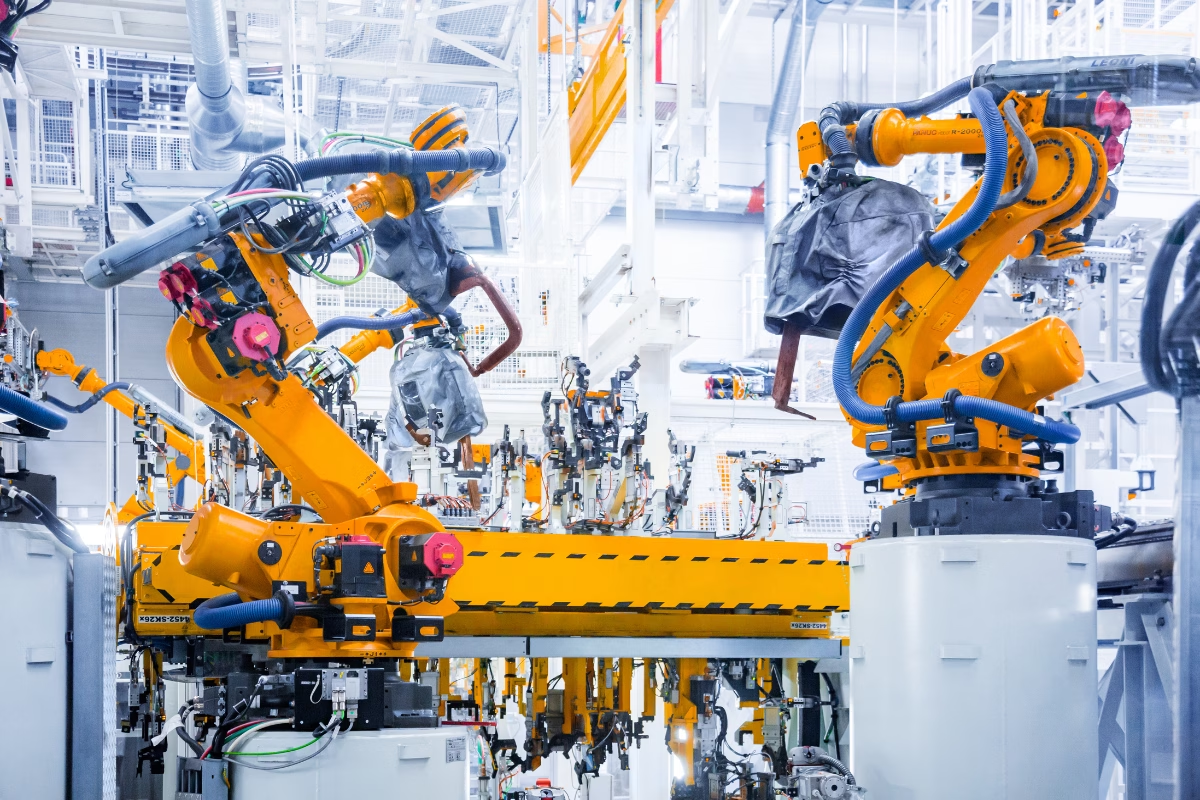
Industrial robots are nothing new, but in Industry 4.0 they gain autonomy and collaboration capabilities. So-called cobots (collaborative robots) work side by side with human operators on assembly lines, performing repetitive or precision tasks without the need for safety cages. In manufacturing, this translates into higher productivity and lower ergonomic risk for workers.
2. Simulation and Digital Twin
Simulation allows the creation of virtual replicas of processes, products, and even entire plants. The Digital Twin concept takes this further: a digital model updated in real time with data from the physical environment. In practice, a factory can simulate changes to the production layout, test new machine parameters, or anticipate bottlenecks before making any changes on the shop floor.
3. Horizontal and vertical system integration
Vertical integration connects the different levels within the same company: from the shop floor (sensors, PLCs, SCADA) to corporate management (ERP, BI). Horizontal integration connects the company to its suppliers, distributors, and customers. When ERP talks to MES and MES talks to the machines, decisions that once took hours can be made in minutes.
4. Industrial Internet of Things (IIoT)
IIoT consists of connecting devices, sensors, and machines to the internet, enabling real-time data collection and sharing. In manufacturing, vibration, temperature, and pressure sensors installed on critical equipment feed monitoring systems that detect anomalies before they become failures. It is the technological foundation of predictive maintenance.
5. Cybersecurity
As factories become increasingly connected, the attack surface expands. Industrial cybersecurity protects OT (Operational Technology) networks, SCADA systems, and IoT devices against unauthorized access, industrial espionage, and ransomware. In a scenario where a breach can shut down an entire production line, investing in cybersecurity is no longer optional.
6. Cloud computing
Cloud computing is what enables the storage, processing, and analysis of the massive volumes of data generated by industrial operations, without the need for robust on-premises servers. Cloud solutions allow managers to access production dashboards from anywhere, scale capacity on demand, and integrate geographically dispersed plants into a single platform.
7. Additive manufacturing (3D printing)
Additive manufacturing produces parts layer by layer from digital models, eliminating the need for molds or specific tooling. In industry, its most immediate applications are rapid prototyping, on-demand spare parts production, and component customization. This reduces inventory, shortens development timelines, and enables mass customization.

8. Augmented reality
Augmented reality (AR) overlays digital information onto the physical environment through smart glasses, tablets, or smartphones. In industrial maintenance, for example, a technician can receive step-by-step visual instructions while performing a repair, reducing errors and execution time. The technology is also applied in immersive training and quality control processes.
9. Big Data and Analytics
Connected factories generate massive volumes of data every second. Big Data and Analytics is the ability to collect, process, and analyze this data to identify patterns, predict failures, optimize processes, and support strategic decision-making. Combined with artificial intelligence, analytics transforms raw data into actionable information: from adjusting machine parameters to replanning production based on demand trends.
Effectively implementing these pillars requires more than purchasing equipment or subscribing to off-the-shelf platforms. In most cases, it is necessary to integrate systems that were not designed to communicate with each other, develop custom software solutions tailored to the reality of each operation, and modernize legacy platforms that still support critical processes. These are areas where a specialized technology partner with expertise in software projects can significantly accelerate results and reduce risk.
Industry 4.0 in Brazil: where we stand and where we are heading
Brazilian manufacturing is more digital than it was a decade ago, but the journey is still long and uneven. The most recent data helps paint this picture with precision.
Digitalization is advancing, but not uniformly
According to the CNI’s Industry 4.0 Special Survey, conducted with over one thousand companies, 69% of Brazilian industries were already using at least one digital technology in 2021; in 2016, that figure was only 48%.
The Manufacturing Technological Productivity Index (IPT), a study conducted by TOTVS in partnership with h2r insights, confirmed this trend: in 2024, 87% of manufacturing companies were already in the upper half of the technological maturity scale. In 2019, only 21% reached that level. The progress is significant, but the study itself notes that being more digital is not the same as being Industry 4.0. Most Brazilian factories still do not monitor production in real time, even though 62% report using some type of production management system.
On the government front, the Nova Indústria Brasil (NIB) program, launched in January 2024, allocates R$ 300 billion (approximately US$ 55 billion) in investments through 2026 via BNDES, Finep, and Embrapii. By June 2025, BNDES had already approved approximately R$ 205 billion in industrial credit, representing 80% of the 2024–2026 target. Within the program, the Industry 4.0 Credit line has allocated R$ 12 billion specifically for the purchase and implementation of new machinery and technologies. The Brasil + Produtivo program, aimed at small and medium-sized enterprises, has served 67,500 SMEs in two years, with an average productivity increase of 28%.
Globally, the Industry 4.0 market is expected to grow approximately 145% by 2028, according to IMARC. Latin America, however, accounts for only 7.2% of this market, while Europe leads with 34.1%. This underscores the need for a concentrated effort if Brazil is to close the gap.
The challenges that still slow down transformation
The improving numbers do not eliminate the structural obstacles. According to CNI’s own research, for 66% of companies, implementation cost is the main internal barrier to adopting digital technologies. In second place, tied, are the lack of clarity on return on investment (26%) and organizational structure and culture (24%).
Lack of awareness about Industry 4.0 concepts and possibilities is another relevant factor, especially among smaller companies. The shortage of qualified professionals to operate and maintain digital systems compounds the problem: Brazil ranks 62nd in the Global Innovation Index and, in the Deloitte Global Manufacturing Competitiveness Index, dropped from 5th place in 2010 to 29th in 2016.
There is also a very concrete bottleneck on the factory floor: the coexistence of legacy systems (outdated ERPs, manual control spreadsheets, disconnected supervisory systems) with new digital platforms. Without integration, data remains fragmented, decision-making becomes slow, and the potential of 4.0 technologies never materializes. The modernization of these structures, with secure migration to cloud-native architectures and API-based integration, is often the first practical step in unlocking the digitalization journey.
Practical benefits of Industry 4.0 for manufacturing
The gains from Industry 4.0 are not merely theoretical. McKinsey estimates that processes related to the fourth industrial revolution can reduce equipment maintenance costs by 10% to 40%, decrease energy consumption by 10% to 20%, and increase labor efficiency by 10% to 25%. These impacts can already be observed in companies that have invested consistently in digitalization, as noted by the Portal da Indústria.
In practice, the most relevant benefits for anyone managing an industrial operation include:
Predictive maintenance with IoT and AI. Instead of following fixed maintenance calendars (which often replace parts still in good condition) or waiting for a breakdown to occur, connected sensors monitor actual operating conditions. Machine learning algorithms identify patterns that precede failures, enabling interventions at precisely the right moment. The result is fewer unplanned downtimes and longer asset lifespans.
Real-time production visibility. Dashboards connected to the shop floor allow managers to monitor indicators such as OEE (Overall Equipment Effectiveness), rejection rate, cycle time, and machine availability at any given moment. This transforms production management from reactive (based on yesterday’s reports) to proactive (based on live data).
Traceability and compliance. End-to-end auditable data, from raw material intake to finished product, facilitates compliance with regulatory standards and sector-specific quality requirements. For food and pharmaceutical manufacturers, this is especially critical.

Mass customization. Flexible production lines, controlled by software, allow rapid configuration changes to accommodate smaller batches and customized products, without the prohibitive setup costs of the traditional model.
Shorter time-to-market. The combination of digital simulation, rapid 3D prototyping, and data analytics reduces the time between product conception and market launch.
To capture these benefits, manufacturers need to go beyond acquiring equipment: they need software that connects sensors, machines, and people into a unified platform. Real-time production dashboards, predictive maintenance algorithms, and AI agents for process automation are examples of solutions that can be custom-built to match the reality of each operation.
How to start the Industry 4.0 journey in your factory
The digital transformation of an industrial plant does not need to (and should not) happen all at once. The most effective approach is gradual, data-driven, and focused on measurable results from the very first project. Below is a practical roadmap in five stages.
Stage 1: Assess current digital maturity. Before investing in any technology, it is essential to understand where the company stands. There are established frameworks for this, such as the ACATECH maturity model and the self-assessment tool from the Brazilian Chamber for Industry 4.0. The assessment reveals which processes are already digital, where the biggest gaps are, and which areas offer the greatest potential return.
Stage 2: Identify quick wins. Pilot projects with a defined scope, controlled investment, and visible ROI within three to six months are the best starting point. A classic example: installing vibration and temperature sensors on a critical machine, connecting them to a cloud platform, and configuring automatic alerts for anomalous conditions. The cost is relatively low, and the gain (avoiding an unplanned stoppage that could cost tens of thousands of dollars) is immediate and tangible.
Stage 3: Integrate existing systems. Many factories operate with ERP, MES, SCADA, and spreadsheets running in silos. Connecting these layers through APIs and middleware is what allows data to flow from the shop floor to the boardroom without manual rework. In many cases, this integration project delivers the highest impact on the 4.0 journey, because it unlocks the value of data the company is already generating but cannot use.
Stage 4: Develop custom solutions. When off-the-shelf software does not address the complexity or specificity of the operation (which is common in industries with proprietary processes), the path is custom development. Monitoring platforms, traceability systems, quality control dashboards, and AI agents for automating operational decisions are examples of solutions that need to be designed for each plant’s context.
Stage 5: Scale with dedicated teams. Once pilot projects prove their value, expanding to other lines, plants, or processes requires sustained execution capacity. Building an internal team from scratch can take months; the alternative is working with managed squads, multidisciplinary teams already assembled and ready to operate at the speed that scaling demands.
NextAge operates precisely at this intersection of industry and technology: from assessment to continuous delivery, with custom software projects, AI agents integrated into operations, and squads ready to scale. If your company is planning the next steps of its digital transformation, it is worth a conversation with our specialists.
Frequently asked questions about Industry 4.0
What is the difference between Industry 4.0 and industrial automation?
Industrial automation is one component of Industry 4.0, but it is not a synonym. Traditional automation executes programmed tasks repetitively. Industry 4.0 goes further: it integrates automation with artificial intelligence, IoT, data analytics, and real-time connectivity, creating systems that communicate, learn, and make decisions autonomously.
What are the 9 pillars of Industry 4.0?
The 9 pillars, defined by the Boston Consulting Group, are: autonomous robots, simulation (Digital Twin), system integration (horizontal and vertical), Industrial Internet of Things (IIoT), cybersecurity, cloud computing, additive manufacturing (3D printing), augmented reality, and Big Data/Analytics.
How much does it cost to implement Industry 4.0?
Costs vary depending on the size of the company, its current technological maturity, and the scope of the project. The most effective approach is to start with focused pilot projects with lower investment and measurable ROI, and scale progressively. In Brazil, the Nova Indústria Brasil program offers specific credit lines through BNDES, including the Industry 4.0 Credit, with favorable conditions for technology acquisition.
Will Industry 4.0 replace workers?
The trend is toward transformation of roles, not total elimination. Repetitive and manual tasks tend to be automated, while demand grows for data analysis, robot programming, digital systems management, and predictive maintenance. Professional reskilling is a central part of this transition, and programs such as Brasil + Produtivo are already preparing thousands of professionals for this new reality.
Is Industry 4.0 viable for small and medium-sized manufacturers?
Yes. Digitalization does not have to start with large investments. Cloud solutions, low-cost sensors, and custom software allow SMEs to adopt 4.0 technologies gradually and at scale. The Brasil + Produtivo program, linked to Nova Indústria Brasil, has already served over 67,000 small and medium-sized enterprises with average productivity gains of 28% and 19% in energy efficiency.