 English
  Português
Quick answer: hiring a software factory in Brazil in 2026 costs, as a market reference, from around R$ 30,000 for an MVP, between R$ 80,000 and R$ 250,000 for a mid-sized system, and above R$ 250,000 for complex projects (values in Brazilian reais). The main price drivers are scope, the number of integrations, team size and seniority, and the deadline. At NextAge, Discovery produces a timeline and investment estimate before development begins. The ranges in this article are market references, not a proposal.
Quick summary
- Price depends on the engagement model: fixed scope (per project), dedicated squad (monthly fee) or support (maintenance and evolution).
- The initial budget is not the total cost: maintenance typically consumes 15% to 25% of the build cost per year.
- Comparing an in-house team’s salaries with a software factory’s monthly fee is misleading, because mandatory payroll charges in Brazil raise the cost by 27% to 56%.
- AI reduces the cost of some stages, but it does not eliminate the cost of requirements, architecture, senior review, security and support.
- Two proposals are only comparable when they list the same scope, the same team and the same inclusions.
Anyone deciding to hire a software factory asks the same question before any sales conversation: how much will it cost? The honest answer is that it depends, but “it depends” does not help build a budget. This guide gathers market ranges with sources and years, explains what drives the price, shows the costs that fall outside the proposal and offers a checklist for comparing vendors.

What is a software factory and what does the price include?
A software factory takes responsibility for delivery: you define the business goal and the team handles the full cycle, from discovery to the system’s evolution. At the NextAge software factory, for example, the team is in-house and multidisciplinary (project management, architecture, product, development, DevOps, UX/UI and QA), there is an SLA for timeline and quality, and the source code, repository and documentation belong to the client.
This differs from staff augmentation, in which the vendor supplies people and management stays with the client. For a deeper look at the difference, read the comparison Software Factory vs Outsourcing. One caveat: the market uses the term “software factory” in different ways. Some vendors call a monthly allocation of professionals a factory, others a project-based delivery. Before comparing prices, confirm what each proposal includes: project management, QA, DevOps, deployment and warranty. Proposals that look similar stop being comparable when one item is left out.
How much does a software factory cost in each engagement model?
Price depends on the model: fixed scope is billed per project, a dedicated squad is billed as a fixed monthly fee, and support is billed for the maintenance and evolution of what is already in production. The table below summarizes the three formats described on the NextAge software factory page.
| Model | How it is billed | Reference range | Who it suits |
|---|---|---|---|
| Fixed scope | Price and timeline for an approved scope | Market: MVP from R$ 30,000, mid-sized R$ 80,000 to R$ 250,000, complex above R$ 250,000 | Projects with clear requirements |
| Dedicated squad | Fixed monthly fee for an exclusive team, with SLA | It varies on project complexity | Digital products in continuous evolution |
| Support and evolution | Monthly fee or per demand | Market reference: 15% to 25% of build cost per year | Critical systems in production |
Not sure which model to choose? NextAge starts with Deep Discovery, which delivers a clear scope, a prioritized backlog and a timeline and investment estimate before any development.
Fixed scope
In a fixed-scope contract, price and timeline are set for an approved scope. The advantage is predictable investment; the risk is that every change becomes an amendment. It makes sense when requirements are clear and unlikely to change. As a size reference:
| Size | Investment range | Estimated timeline |
|---|---|---|
| Simple (MVP) | R$ 30,000 to R$ 80,000 | 2 to 4 months |
| Mid-sized | R$ 80,000 to R$ 250,000 | 4 to 8 months |
| Complex or enterprise | Above R$ 250,000 | 8 months or more |
Other sources show lower entry values. The Sebrae PR Community (an article written by an agency, with averages described as from 2025) points to R$ 15,000 to R$ 40,000 for a simple system, R$ 40,000 to R$ 100,000 for a multi-module web platform, R$ 70,000 to R$ 150,000 or more for a mobile app with a management panel, and R$ 150,000 to R$ 300,000 or more for enterprise software. The gap between sources comes from different criteria: number of screens, integrations, level of design and security requirements. Use the ranges as an order of magnitude, not as a price list.
Dedicated squad
In the dedicated squad model, an exclusive team works on your product for a fixed monthly fee, with an SLA. The amount depends on team size, seniority and what is included (management, QA, DevOps, UX). The advantage is flexibility to reprioritize every sprint; the risk is paying for capacity without clear delivery goals. Define outcome indicators from the start. This format suits digital products in continuous evolution, where the scope does not fit a closed contract.
Support and evolution
Support maintains and evolves systems that are already in production. It is recommended for critical systems that cannot stop, and it should be in the budget from the first proposal. At NextAge, Application Managed Services handles fixes, improvements and continuous evolution after deployment.
What makes the price of a software factory go up or down?
Six factors explain most of the difference between quotes: scope, integrations, design, technology and scale, deadline, and team size and seniority.
- Scope and complexity. More features and business rules require more hours. A system with few screens can be complex, and a large system can be simple; what matters is the logic, not just the size.
- Integrations and data migration. Connecting the system to ERPs, CRMs, payment gateways, partner APIs and legacy systems requires additional development, testing and maintenance, as Sebrae PR details.
- Design and user experience. Custom interfaces, clickable prototypes and journey validation involve UX and UI professionals.
- Technology and scale. Cloud architectures, high availability, security requirements and compliance (such as Brazil’s LGPD data protection law) call for more specialized professionals and sturdier infrastructure.
- Deadline. Short deadlines may require a larger team and parallel work, which raises cost without reducing the volume of work.
- Team size and seniority. A team with more senior professionals delivers with less rework but costs more per hour; the right mix of profiles is usually more efficient than an all-senior or all-junior team.
What costs fall outside the initial budget?
Beyond development, plan for maintenance (a market estimate of 15% to 25% of the build cost per year), infrastructure, third-party licenses, scope changes and your own team’s time. The maintenance estimate appears; it reflects a consensus among vendors, not an independent study, and works as a planning reference.
- Maintenance and evolution: fixes, security updates and small improvements. A system without maintenance accumulates risk and rework cost.
- Infrastructure: hosting, backups, monitoring and test environments.
- Third-party licenses: tools, commercial libraries and payment, messaging or mapping services.
- Scope changes: every project changes; agree in the contract on how each change is estimated and approved.
- Data migration: bringing data over from old systems usually takes longer than expected.
- Internal time: the client needs to validate deliveries, answer business questions and set priorities. Reserve hours from your team for this.
The support model exists so that these recurring costs have an owner and predictability. The sooner it enters the conversation, the fewer surprises appear after delivery.
Software factory or in-house CLT team: which costs less?
Comparing only salary with a monthly fee is misleading: a CLT employee (Brazil’s formal employment regime) costs 27% to 56% more than the salary, before recruiting, turnover, severance and idle time. According to the ValorFinal study (updated in June 2026), the mandatory cost is about 1.27 times the salary under the Simples Nacional tax regime and about 1.55 times under Lucro Presumido or Real; with transport and meal allowances, it exceeds 1.8 times for lower salaries. A salary of R$ 10,000 costs R$ 12,744 under Simples or R$ 15,544 under Lucro. These are estimates and do not replace your accountant’s calculation.
To illustrate, consider an in-house team equivalent to a five-person squad in Curitiba, using median salaries (50th percentile) from the Robert Half 2026 Salary Guide:
| Profile | Monthly salary |
|---|---|
| Senior back-end developer | R$ 15,300 |
| Mid-level back-end developer | R$ 12,250 |
| Mid-level front-end developer | R$ 12,250 |
| Mid-level test analyst | R$ 10,200 |
| Product Owner | R$ 9,100 |
| Total salaries | R$ 59,100 |
| With mandatory charges, Simples (x 1.27) | about R$ 75,000 per month |
| With mandatory charges, Lucro (x 1.55) | about R$ 92,000 per month |
These figures do not include recruiting, equipment, management, idle time, turnover or severance (the 40% FGTS penalty, notice period and proportional payments). Nor do they include the cost of hiring in a scarce market: a Brasscom study released in 2021 projected demand for 797,000 ICT professionals between 2021 and 2025, with about 53,000 graduates per year against an average annual demand of 159,000, according to Convergência Digital. The data is from 2021, but it shows why building a team takes time.
Does that mean a software factory is always cheaper? No. An in-house team tends to pay off when demand is continuous, stable and central to the business. A factory has the advantage when demand is occasional or variable, when you need to start fast, or when the company does not want to take on technical management and hiring risk. If your priority is keeping day-to-day control, NextAge’s Staff Augmentation integrates vetted professionals into your team. The honest calculation compares total cost, not just the payroll line against the invoice line.
Has AI made custom software cheaper in 2026?
AI reduces the cost of some stages, such as repetitive code and testing, but it does not eliminate the cost of requirements, architecture, senior review, security and support. The Stack Overflow Developer Survey 2025 shows that 84% of respondents use or plan to use AI tools, but also that 66% cite “AI solutions that are almost right, but not quite” as their biggest frustration, and 45% say debugging AI-generated code takes more time. In addition, 46% distrust the accuracy of these tools, against 33% who trust it. That review time is spent by senior professionals, which is the most expensive hour on the team.
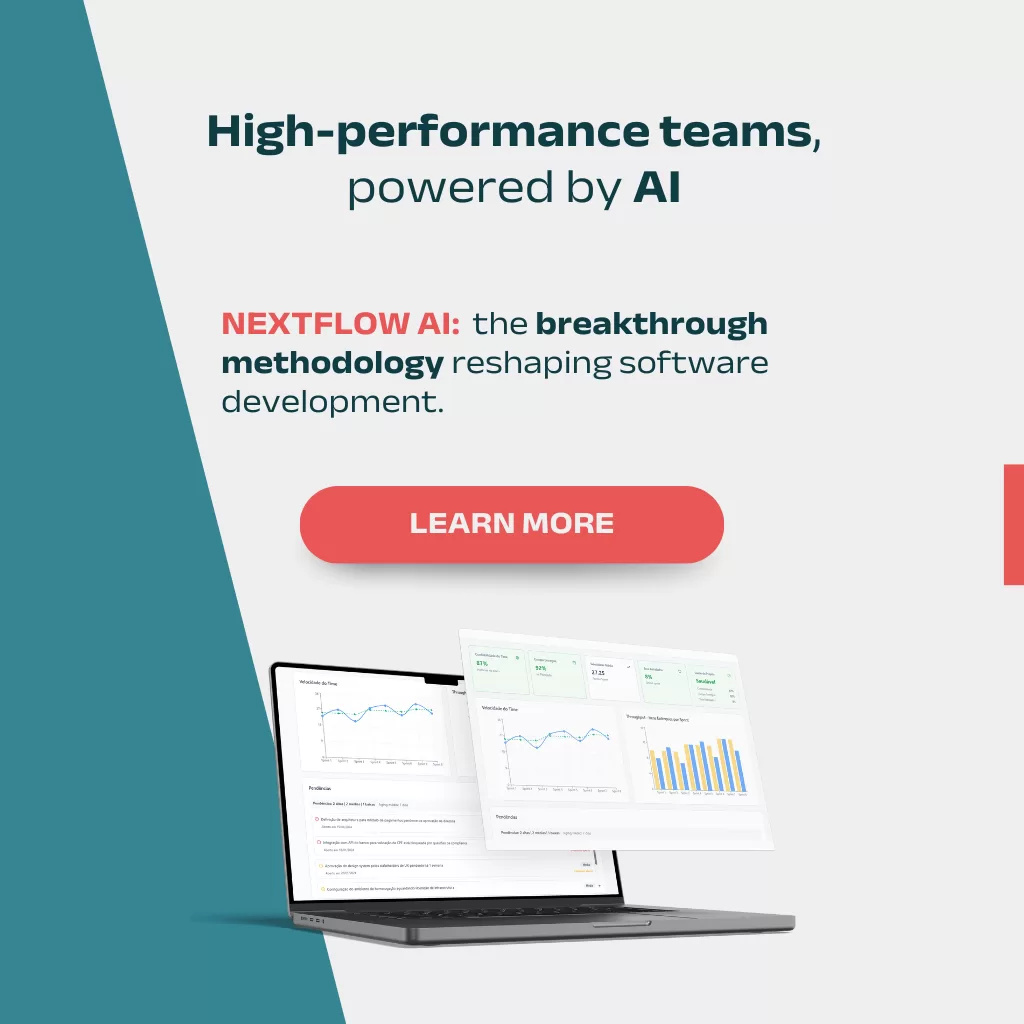
In practice, the gain exists when AI is built into an engineering process that reviews the output. NextFlow AI, NextAge’s methodology that combines specialists and AI at every stage of development, delivers, according to the company, up to 40% faster deliveries and automated documentation. For those who want AI inside the product, and not only in the development process, there are also AI agents. When evaluating a vendor, ask how AI enters the process, what the concrete gain in timeline is and how that shows up in the price.

How to request and compare software factory quotes
Two proposals are only comparable when they list the same scope, the same team and the same inclusions: management, QA, DevOps, deployment and warranty. Use this checklist when you receive each proposal:
- Scope and acceptance criteria: what will be delivered, what is left out and how each delivery will be approved.
- What the price includes: project management, QA, DevOps, UX, deployment and environments.
- Billing model and adjustment: project, monthly fee or hours; how and when the amount is adjusted.
- Team and seniority: who is on the team, at what level of dedication and how professionals are replaced.
- SLA: delivery and response times, how they are measured and the consequences of missing them.
- Code ownership: source code, repository and documentation must belong to the client, expressly.
- Warranty and support: how long defects are fixed at no cost and what happens afterward.
- Contract exit: delivery of code and documentation, and knowledge transfer.
Be wary of prices far below the others and of scopes described in a few lines, since they often hide items left out of the price or future amendments. To detail each clause, see the guide on the software factory contract. On quality, confirm that dedicated QA, automated testing and code review are in scope, as in NextAge’s Quality Center.
How to reduce cost without losing quality
The safest way to spend less is to reduce uncertainty: start with a Discovery, deliver an MVP and prioritize the backlog by value.

- Run a Discovery before contracting development: Mapping goals, users, processes, integrations and risks reduces rework and budget surprises.
- Start with an MVP: Validate the essentials before investing in all the features.
- Prioritize by business value: Deliver first what generates results and postpone what no one will use.
- Write acceptance criteria: They prevent disputes over what was delivered.
- Prefer short deliveries: A McKinsey and University of Oxford study from 2012 analyzed more than 5,400 IT projects and found that, in large projects (above US$ 15 million), each additional year of duration adds 15% to the cost overrun. The study covers only large projects, but the lesson applies at any scale: short cycles and checkpoints reduce risk.
- Plan support from the start: It avoids the emergency cost of an abandoned system.
What results does a software factory deliver?
The results below come from NextAge projects and show the return of each type of delivery, not the price paid.
- Fashion and luxury marketplace operating in 12 countries: an agile squad, with senior QAs and developers, resolved 100% of critical bugs, cleared 89% of the backlog (which had more than 1,400 cataloged bugs) and raised checkout conversion by 12%.
- Insurer with an accredited network across Brazil: a digital inspection platform with AI replaced a process with a queue of up to 15 days, and NPS rose 41%.
The remaining cases are on the NextAge software factory page.
Frequently asked questions about software factory costs
How much does a software factory cost per month?
It depends on the model. In the dedicated squad model, billing is a fixed monthly fee that varies with team size and seniority and with what is included (management, QA, DevOps, UX). [Range to be confirmed by sales.] At NextAge, Discovery produces an estimate before development.
How much does custom software development cost?
As a market reference, an MVP starts at around R$ 30,000, a mid-sized system falls between R$ 80,000 and R$ 250,000 and a complex project exceeds R$ 250,000. Other sources, such as Sebrae PR, indicate lower starting values for simpler systems.
Does a software factory charge by the hour or by the project?
It can be by project (fixed scope), by team monthly fee (dedicated squad) or by demand (support). Some vendors also charge by the hour. What matters is understanding what each format includes and who bears the risk of changes.
What is included in a software factory’s price?
It depends on the proposal. Generally, project management, development, testing and deployment; confirm in writing whether QA, DevOps, UX and warranty are included, because that is where proposals diverge the most.
Is a software factory cheaper than an in-house team?
Not always. An in-house team tends to pay off when demand is continuous and stable. For occasional or variable demand, a factory usually avoids recruiting, idle time and severance costs. Compare the total cost, as in the CLT section above.
How much does software maintenance cost per year?
The market estimate is 15% to 25% of the amount invested in the build, per year. The percentage varies with complexity, infrastructure and the pace of the system’s evolution.
Has AI made software development cheaper in 2026?
In part. AI reduces the cost of stages such as repetitive code and testing, but requirements, architecture, senior review, security and support still cost money. The Stack Overflow 2025 survey shows that 45% of developers say debugging AI-generated code takes more time.
How do I compare software factory proposals?
Compare scope, inclusions, team, SLA, code ownership, warranty and exit rules, using the checklist in the section “How to request and compare software factory quotes”. For legal detail, see the post on the software factory contract.
Next step: start with Discovery
The cost of a software factory is not a single number: it depends on the model, the scope, the team and the costs that fall outside the proposal. The safest way to reach a realistic figure is to start with a Discovery, which turns an idea into a clear scope, a prioritized backlog and a timeline and investment estimate. Tell a NextAge specialist about your challenge and start there. If you are still evaluating, download the guide How to regain control of your IT projects in 90 days.
The values in this article are market references with the source and year indicated and do not constitute a commercial proposal. Estimates of CLT employee costs do not replace an accountant’s analysis.