 English
  Português
More than 70% of Angolan companies report difficulty hiring qualified technology professionals. For most managers reading this statistic, it is not a surprise: it is an accurate description of what happens every month inside their organizations. Approved digitalization projects stalled at the recruitment stage. Budgets consumed by endless selection processes. Professionals hired with great effort who leave within six months for a bank or multinational that pays more.
The problem is not a lack of will to digitalize. It is a lack of people to execute.
There is, however, an alternative that most Angolan companies have not yet considered: IT outsourcing in Brazil. A historical partner, sharing the same language, only 4 hours apart in time zone, and with 2.1 million IT professionals available. For Angola, this is the choice that solves the problem at its root, without waiting for the local talent market to recover a deficit that has accumulated over decades.
This article explains what IT outsourcing is, why Brazil is the best destination for Angolan companies, and what you need to know before taking the first step.

What Is IT Outsourcing and When Does It Make Sense for Angolan Companies?
IT outsourcing is the engagement of an external specialized company to develop software, manage systems, or operationalize the technological infrastructure of an organization. Instead of maintaining the entire structure internally, the company transfers technology responsibilities to a partner with specific expertise, keeping its focus on its core business activities.
This is not a new concept. According to Gartner data, the global IT outsourcing market is expected to reach 470 billion dollars in 2025, growing at 6.7% per year; and 70% of global companies plan to increase their investments in outsourced IT services. What is relatively new is Angola considering Brazil — rather than only local or European providers — as the natural destination for this strategy.
IT Outsourcing vs Local Hiring: The Practical Difference
| Dimension | Local hiring in Angola | Outsourcing in Brazil |
|---|---|---|
| Talent availability | Scarce and highly competitive | Abundant (2.1M IT professionals) |
| Time to first developer | 3 to 6 months (average) | 2 to 4 weeks |
| Cost per senior profile | High and rising | Competitive |
| Turnover risk | High | Absorbed by the partner |
| Available tech stack | Limited | Full-stack, cloud, AI, data, DevOps |
What Engagement Models Are Available?
There are three main models, each with distinct characteristics:
Dedicated squad: a complete team (developers, QA, UX, project management) allocated exclusively to the client’s project. This is the most suitable model for digital products with continuous evolution, where the context accumulated by the team grows in value over time.
Staff augmentation: one or more professionals integrated directly into the client’s internal team, reinforcing a specific skill or covering a demand spike. Recommended when the company already has a structured IT team and needs to scale capacity quickly.
Fixed-scope project: scope, timeline, and budget defined upfront. Suitable for MVPs, system migrations, or projects with well-specified requirements. It is also the recommended starting point: it allows the client to validate the partner with controlled risk before committing to a long-term engagement.
The Problem Angola Faces: The Technology Talent Shortage
Angola has advanced significantly in connectivity and digitalization over the past decade. Internet access grew from 14.3% in 2016 to more than 33% of the population in 2023, according to INACOM data. The ICT sector represented 4.9% of GDP in 2023 and has the potential to exceed 7% by 2027, according to Angola’s Ministry of Economy and Planning. The National Development Plan (PDN) 2023–2027 positions digital transformation as a structural national priority.
The problem lies elsewhere: technological human capital has not kept pace. Infrastructure grew; the professionals capable of operating and developing it did not.
More than 70% of Angolan companies report difficulty hiring qualified technology profiles, and around 60% already rely on external consultants for critical IT functions. The President of Deloitte Angola, José Barata, was direct on the subject: “the attraction, development, and retention of talent is today one of the main challenges for technology to truly serve the business”, with particular impact on financial services, banking, insurance, and telecommunications. For Nuno Carvalho, partner at Deloitte Angola, “human capital, especially in the technology area, continues to be a major concern for organizations, given the scarcity of highly qualified professionals.”
What Happens When the Project Stalls
There is a cycle many Angolan managers know firsthand: the digitalization need is identified, the budget is approved, the recruitment process begins, months pass without suitable candidates, and the project remains suspended indefinitely. Meanwhile, competitors advance, operational inefficiencies accumulate, and the window of opportunity closes.
The question is no longer whether you will outsource part or all of your technology execution. It is when, and to whom.
Why Brazil Is the Best IT Outsourcing Partner for Angola?
There are several common destinations for IT outsourcing: India, Portugal, Eastern Europe, South Africa. Each has its attributes. Brazil is the only one that combines, in a single destination, all the factors that determine the success of a remote project for an Angolan company.
1. Shared Language: Communication Without Friction
This is the strongest and most singular argument. Brazil is the only country in the world with scale in technological talent that shares Portuguese with Angola. Alignment meetings, technical specifications, code reviews, sprint reports, post-launch support: everything happens in Portuguese, without intermediation and without the risk of context loss that communication in a foreign language always introduces.
Anyone who has worked with teams in India or Eastern Europe knows the hidden cost of conducting all critical communication in English: ambiguities that generate rework, business nuances that do not arrive intact, meetings that end with divergent interpretations of what was decided. With Brazil, that friction does not exist.
There are vocabulary differences between Brazilian and Angolan Portuguese, as between any pair of Lusophone countries. In practice, in software projects, these differences do not create meaningful friction; technical terminology is shared, and mutual understanding is immediate.
2. Compatible Time Zone: Real-Time Collaboration
Luanda is at UTC+1, year-round (Angola does not observe daylight saving time). São Paulo and Brasília are at UTC-3, also year-round (Brazil abolished daylight saving time in 2019). The difference is 4 hours, constant and predictable.
In practice: when it is 9am in Luanda, it is 5am in São Paulo. When it is 2pm in Luanda, it is 10am in São Paulo. Teams have between 4 and 5 hours of real working overlap per day; sufficient for daily standups, sprint reviews, and urgent decisions. The rest is handled asynchronously, with structured documentation that improves, rather than hinders, project management quality.
Compare this with Asian destinations (8 to 12 hours difference, with no useful overlap) or Eastern Europe (close time zone, but without the language benefit). Brazil offers the best available balance.
3. The World’s Largest Portuguese-Speaking Tech Talent Pool
Brazil has 2.1 million registered IT professionals (Brasscom, Sectoral Report 2024), the largest Portuguese-speaking technology ecosystem in the world. The sector grew at an average rate of 8.4% per year over the past three years and holds 4th place in the Kearney Global Services Location Index 2023, the most credentialed global ranking of destinations for technology services outsourcing, behind only India, China, and Malaysia.

Profiles available in abundance: full-stack, back-end (Java, Python, .NET, Node.js), mobile (iOS and Android), cloud and DevOps (AWS, Azure, GCP), data engineering, AI, and machine learning. In Angola, these same profiles are rare, competed for among banks, telecoms, and multinationals, and take months to recruit when available at all.
4. Technical Maturity and Proven International Experience
Brazilian IT companies have decades of experience serving international clients: American, European, and increasingly African. This translates into mature delivery processes, mastery of agile methodologies (Scrum, Kanban), structured documentation, quality management, and well-defined SLAs. This is not theoretical experience: it is the difference between a partner that has already delivered dozens of complex projects for demanding clients and one that is still learning the rules of the international game.
Technical assessment platforms such as HackerRank and CodeSignal consistently rank Brazilian developers among the world’s best in code quality and problem-solving.
5. Competitive Cost Without Sacrificing Quality
The exchange rate differential between the Angolan kwanza, the dollar, and the Brazilian real creates a favorable equation: the same budget that allows hiring a mid-level profile locally can access a senior developer in Brazil, with proven international experience.
An important note: for the Angolan market, the most relevant argument is not low price (which can be associated with low quality), but access to talent that simply does not exist locally at any reasonable cost. The cost savings are a welcome consequence; the ability to execute the project is the central objective.
6. Historical Ties and Deep Cultural Affinity
Angola and Brazil share centuries of history, cultural references, and professional relationship styles. The World Bank itself notes: “Angola’s major cities, including Luanda, look westward over the South Atlantic towards Brazil, another Portuguese-speaking country.” This affinity is not sentimental; it has direct practical implications for remote team integration. The cultural adaptation curve between an Angolan team and a Brazilian team is significantly shorter than with any other outsourcing destination. A Brazilian developer understands the references of an Angolan company much faster than an Indian or Ukrainian developer would.
Brazil vs Other Destinations: A Comparison for Angolan Companies
| Criterion | Brazil | India | Eastern Europe | South Africa | Angola (local) |
|---|---|---|---|---|---|
| Language | Native Portuguese | English | English | English | Portuguese |
| Time zone vs Luanda | -4h (good overlap) | +4.5h (difficult) | +0h to +2h | -2h (reasonable) | Same |
| IT talent pool | 2.1M professionals | Very large | Large | Medium | Very limited |
| Cost per senior developer | Competitive | Low | Medium | Medium-high | High and scarce |
| Cultural affinity | Very high | Low | Low | Medium | Total |
| Agile maturity | High | High | High | Medium | Low-medium |
| Communication in Portuguese | Yes | No | No | No | Yes |
Reading the table: Brazil is the only destination that combines a shared language, a favorable time zone, a massive talent pool, and deep cultural affinity. For an Angolan company, it is the choice that eliminates the most communication and integration risks simultaneously.
What Types of Projects Can Be Developed in Brazil for Angola?
The short answer: practically any software project. The useful answer is more specific, because the sectors with the highest demand in Angola have particular needs.
Enterprise Management Systems and Data Integration
ERP (Enterprise Resource Planning), CRM systems, Business Intelligence platforms, integration between legacy systems and new cloud solutions. Large Angolan groups in distribution, construction, oil, and retail have complex needs that generic international solutions do not adequately cover; and custom development in Brazil is a mature and accessible alternative.
Mobile Applications and Digital Platforms
With growing smartphone penetration and expanding 4G coverage, Angola has a receptive market for mobile applications. Banks, insurers, retailers, and public services are launching apps and digital portals. Mobile development (iOS and Android) and web platforms are exactly where Brazilian talent has the greatest abundance and technical depth.
Cybersecurity and Cloud Infrastructure
Deloitte Angola identified cybersecurity as one of the main technology priorities for the Angolan market in 2025. Cloud architecture (AWS, Azure, GCP), identity and access management, security monitoring, and incident response are services with strong local demand and a critical scarcity of available expertise.
Solutions for Banking, Oil, and Government
The three largest IT buyers in Angola have specific needs and relevant budgets:
Banking: internet banking, mobile payment applications, compliance systems with the Banco Nacional de Angola (BNA), machine learning-powered fraud prevention.
Oil and gas: operational monitoring dashboards, seismic data integration, asset management systems, and predictive maintenance.
Government: public service portals, interoperability systems between institutions (aligned with the National Interoperability Platform of the PDN 2023–2027), digital tax administration platforms for the AGT.
How It Works in Practice: Hiring a Development Team in Brazil
The idea of hiring outside Angola raises legitimate operational questions. The process, in practice, is more accessible than it appears.
The Step-by-Step Process
1. Discovery call (video conference): alignment on requirements, preferred technology stack, management model, and success criteria. Scheduled within the Angola–Brazil time zone overlap, without scheduling difficulties.
2. Technical and commercial proposal: proposed profiles, timelines, pricing model, and basic contractual documentation.
3. Technical interviews: the Angolan client interviews candidates directly, in Portuguese. No intermediaries, no translation, no ambiguity.
4. Contract and formalization: international service agreement, denominated in USD or EUR. Brazilian companies with experience serving African clients have this process structured.
5. Onboarding: integration of the team into the product context, tools (Jira, Slack, GitHub), and defined agile rituals.
6. Sprint 0: environment setup, backlog alignment, and first tangible deliveries.
7. Ongoing operation: regular sprints, fortnightly demos, performance reports, and quality monitoring.
With an experienced and well-structured partner, the first professionals can be operational within 2 to 4 weeks of the signed contract. For Angolan companies accustomed to months of recruitment without result, this speed is, in itself, a decisive argument.
NextAge’s New Staff Augmentation: The Evolution That Eliminates the Risks of Traditional Outsourcing
IT outsourcing has a risk that rarely appears in contracts: the management risk.
The company hires a remote developer, integrates them into internal tools, and for a few months it works. Then productivity plateaus, the professional settles into a comfort zone, turnover arrives, and the client starts from scratch: a new selection process, a new onboarding, a new context learning curve. For an Angolan company that already spent months trying to hire locally, repeating this cycle with an external partner is an unacceptable cost.
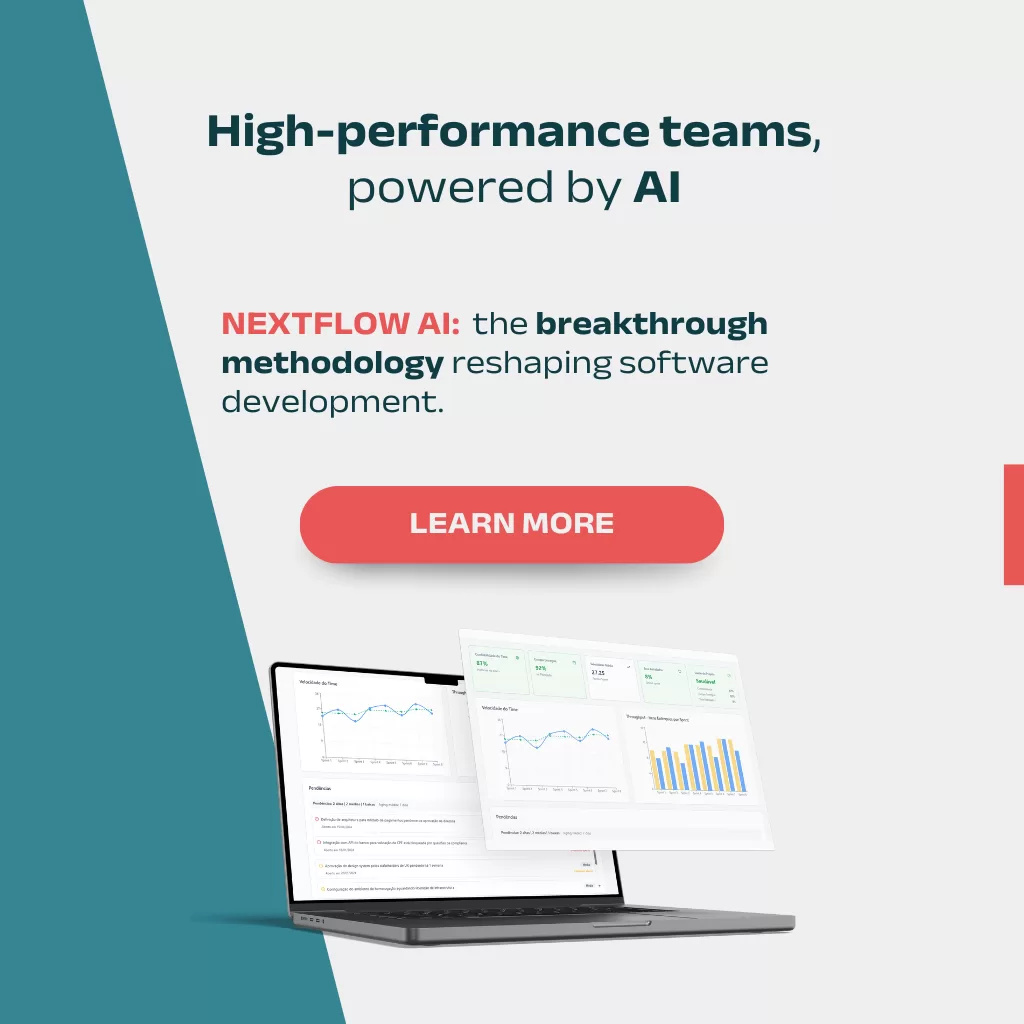
It was to solve this structural problem that NextAge developed the new Staff Augmentation: a proprietary methodology that goes beyond people allocation and delivers what companies actually need: results from day one, with a stable and committed team.
The model rests on three pillars:
Teams ready to perform. NextAge’s selection and onboarding process ensures professionals arrive contextualized and with validated competencies for the client’s specific project. There are no weeks of warming up.
Active performance management. NextAge continuously monitors the delivery quality of allocated professionals — something traditional outsourcing simply does not do. If delivery standards drop, NextAge acts before the client needs to raise the issue.
Turnover cost absorption. When a professional leaves, NextAge replaces them without impact to the client: no new recruitment cycle, no loss of context, no renegotiation. The client contracted a result, not a person.
With more than 19 years in the market, over 600 companies served, and a presence in more than 10 countries, NextAge has experience across projects of varying complexity — with clients including Sicredi, XP, WEG, Scania, and Betfair (a British group with operations across several European countries). The model has been tested in demanding international contexts; and it works.
5 Questions Angolan Managers Ask Before Hiring in Brazil
1. How will I manage a team 4 hours away, without ever meeting them in person?
Managing remote teams in Brazil, for Angolan clients, is done with well-defined agile rituals: daily standups within the overlap window, two-week sprints with tangible deliveries, fortnightly demos, and a permanent asynchronous communication channel. The 4 to 5 hours of useful daily overlap is sufficient for critical decisions; the rest is handled asynchronously, with documentation that improves, rather than harms, project management. For in-person visits, Luanda and São Paulo have regular air connections.
2. How is payment handled? Can I pay in kwanzas?
International contracts with Brazilian companies are normally denominated in USD or EUR, with payment by international bank transfer. Companies with experience serving African clients have this process structured and familiar. Invoicing is typically monthly, which facilitates financial planning.
3. What if the project does not go as expected? Who is accountable?
The answer depends entirely on the partner chosen. With the fixed-scope project model, scope, timeline, and budget are defined contractually. With the dedicated squad model, performance SLAs and quality criteria must be included in the contract. The difference between a good partner and a poor one is exactly this: a good partner has processes, metrics, and accountability for results, not merely for hours delivered.
4. Do Brazilian developers understand the reality of Angola?
They do not need to know Angola to deliver good software. What they need is to understand the project requirements — and that is the function of the discovery and onboarding process. Cultural affinity and shared language greatly facilitate that understanding. A Brazilian developer grasps the references of an Angolan company much faster than an Indian or Ukrainian developer would. Business context is conveyed in Portuguese, without translation losses.
5. Are there already Angolan companies working with IT partners in Brazil?
Yes, but they are still a minority — which represents a clear competitive advantage for those who adopt the model now. Companies in the financial and telecommunications sectors already have experience with international outsourcing. The growth of connectivity in Angola and the maturity of remote work models are making this option increasingly accessible to companies across all sectors.
Next Steps: How to Assess Whether Outsourcing in Brazil Is Right for Your Company
Angola is at a digital inflection point. The PDN 2023–2027, the Angola Digital project, the arrival of 5G, and the pressure to diversify the economy beyond oil are creating a window of opportunity that companies acting first will capture. The local technology talent will not resolve the deficit in the next two or three years. Companies that need to execute now need an external partner.
Brazil is that partner: not for sentimental or historical reasons (though those reasons exist), but for practical and verifiable ones. Language, time zone, talent pool, process maturity, and cost. No other outsourcing destination brings all of these attributes together for an Angolan company.
The first step does not need to be a long-term contract. It can be a fixed-scope project of 8 to 12 weeks to validate the partner’s delivery quality with controlled risk. Most companies that try the model do not go back.
Talk to NextAge and find out how Outsourcing 2.0 can deliver your IT projects from Brazil →
Also read: Software factory vs outsourcing: which model to choose in 2026?
Frequently Asked Questions
What is IT outsourcing?
IT outsourcing is the engagement of an external specialized company to develop software, manage systems, or operationalize the technological infrastructure of an organization. Instead of maintaining the entire structure internally, the company transfers technology responsibilities to a specialized partner, ensuring access to qualified talent with predictable costs and without the burdens of direct hiring.
Why is it so difficult to hire developers in Angola?
Angola faces a structural technology talent deficit: more than 70% of Angolan companies report difficulty hiring qualified technology profiles, and around 60% already rely on external consultants for critical IT functions. Local technical training is not growing at the pace of demand, and the few professionals available are competed for among banks, telecoms, and multinationals, which drives up costs and increases turnover.
Why is Brazil the best IT outsourcing partner for Angola?
Brazil uniquely combines, for Angola, five attributes: a shared language (Portuguese), a favorable time zone (4 hours difference from Luanda), the world’s largest Portuguese-speaking technology talent pool (2.1 million IT professionals), proven international technical maturity, and strong cultural affinity. No other outsourcing destination brings all of these factors together simultaneously.
What is the time zone difference between Angola and Brazil?
Angola (UTC+1) is 4 hours ahead of Brasília time (UTC-3). The difference is constant throughout the year, as Angola does not observe daylight saving time and Brazil abolished daylight saving time in 2019. In practice, teams have between 4 and 5 hours of real working overlap per day.
What types of IT projects can be developed in Brazil for Angolan companies?
Practically any software project: enterprise management systems (ERP), mobile applications (iOS and Android), web portals, payment platforms, cybersecurity solutions, cloud infrastructure, data analytics dashboards, and systems for regulated sectors such as banking, oil and gas, and government.
How is payment made to a Brazilian IT company?
International contracts with Brazilian companies are normally denominated in USD or EUR, with payment by international bank transfer. Brazilian companies with experience serving African clients have the international invoicing process structured, with monthly invoices issued for services rendered.
What is NextAge’s new Staff Augmentation?
A proprietary NextAge methodology that goes beyond traditional IT professional allocation. Instead of providing human resources for the client to manage alone, NextAge guarantees teams ready to perform from day one, with accelerated onboarding, active performance management, and absorption of turnover costs. The client contracts results, not hours worked. Learn more here.