 English
 Português
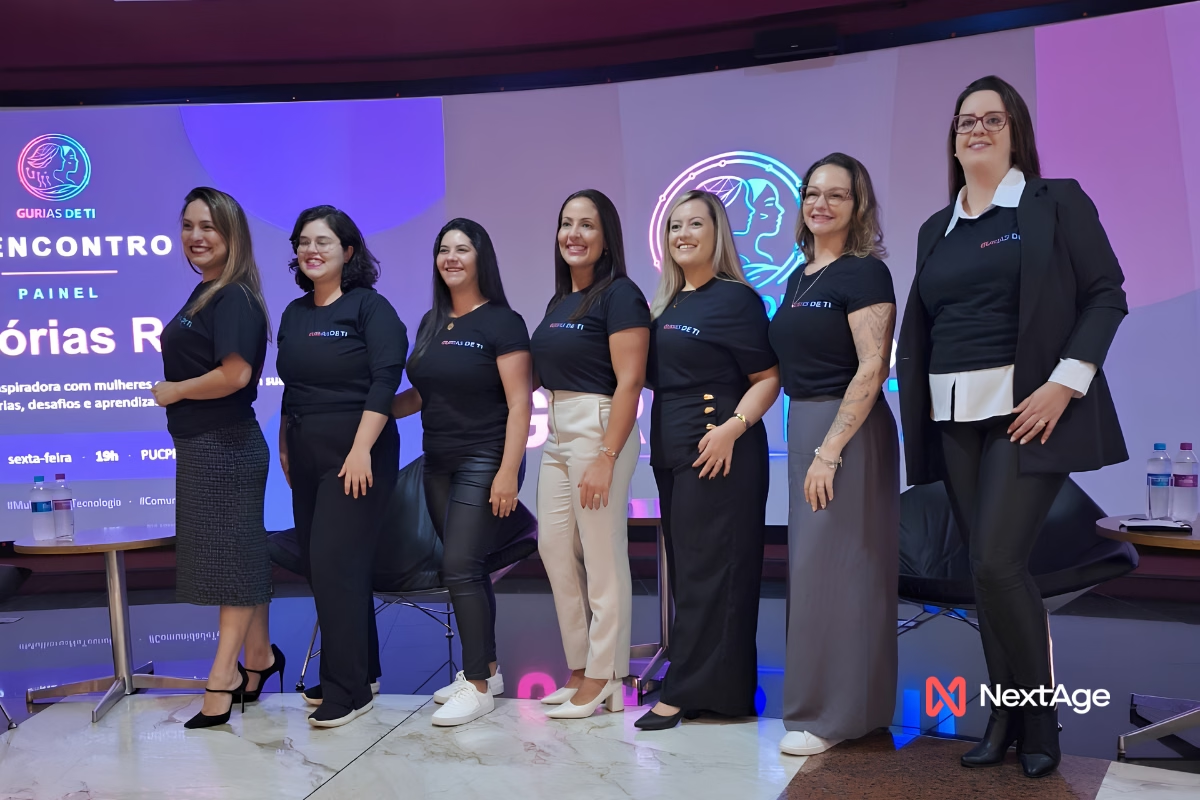
Founded in November 2025 by five professionals in Curitiba, Brazil, Gurias de TI already brings together more than 170 women who work, or want to work, in technology. The initiative was born to address a problem that the numbers still make clear: in an expanding sector, women remain underrepresented, especially in technical and leadership roles.
Brasscom’s 2025 Diversity Report shows that women now make up 39.2% of the workforce in Brazil’s Information and Communication Technology (ICT) sector, equivalent to 485,800 of 1.2 million formal workers, and hold 35.2% of director and manager positions. The picture changes when the focus is on IT specialists: according to the W-Tech 2025 study by Observatório Softex, women account for 19.2% of that category, hold 13.1% of director roles and represent only 17.8% of graduates in the field, while earning on average 19.3% less than men. At the current pace, parity would only be reached around 2110. There is progress, such as the 29.8% of women among graduates of artificial intelligence courses, above the global average of 22%, but the gap is still wide.
It is in this context that Gurias de TI emerged. The idea came out of a conversation in November 2025, during a monthly networking event for security managers, a group that until then had been made up only of men. Five women attending the event realized they shared the same need. “I have always felt the need to have other women to talk to, to exchange ideas, to check whether I’m wrong in the decisions I’m making,” recalls Lígia Abrão, one of the founders and an infrastructure and operations manager at a large education company. Days later, they met for a happy hour and invited other professionals. The name comes from the way people speak in southern Brazil: “We call ourselves ‘Gurias’ because here in the South, and here in Curitiba, that’s how we address each other,” she explains.

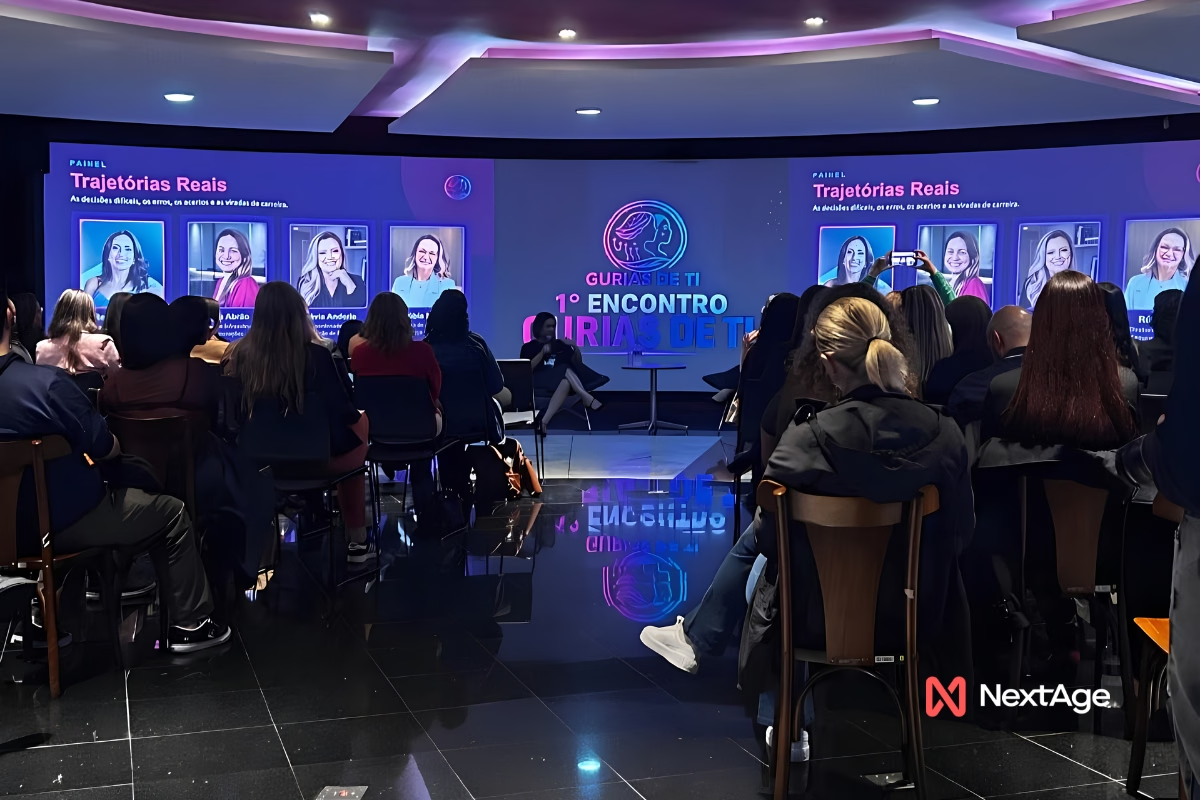
Since then, the group has grown and now brings together more than 170 women of all career levels, in a messaging group kept exclusive to Curitiba and its metropolitan area, which allows the seven organizers to give attention to each member. Lígia says that, while traveling and comparing initiatives across Brazil, she found groups for executives and for early-career professionals, but few that mixed all stages. “We work with all levels,” she sums up. Through the group, members share résumés and post job openings from the companies where they work. Outside it, the collective holds in-person events with coffee and networking, sponsored by partner companies: the first took place in August, the second in October, and the next is planned for December. There, professionals share their career stories with an audience that includes women who want to enter technology or move between areas within it. The space is open to anyone working in technology in any role, including marketing at tech companies, and also to men, as long as, according to Lígia, they come with an attitude of listening.
The main value of these events, according to the founder, is allowing professionals to let their guard down. She talks about “taking off the armor,” since women put so much pressure on themselves, believing they cannot make mistakes or be feminine. “I just want to be the professional woman, mother, daughter,” she says, summing up what participants are looking for. It is not a self-help group, she clarifies, but a place “where we can understand each other”: someone who needs to arrive on time to pick up her child from school sees the coffee break extended to accommodate her.
The need for this space shows in the obstacles that, according to Lígia, still weigh on women in the field. The first is veiled sexism, which appears in hiring processes with higher demands on requirements and in uneven evaluations of behavior. “If a woman has a somewhat harsher tone, she is judged one way. If a man has a harsher evaluation, he’s just stressed,” she compares. The environment also shapes behavior: many professionals ended up “masculinizing themselves a bit to fit in,” something she sees losing strength. Lígia uses her own routine as a counterpoint: “I wear high heels every day, I love wearing dresses and skirts, and I work with a team that is almost 100% male.” There is also an internal barrier. According to her, women take longer to apply for jobs and higher positions because they feel they need to be much better than they already are, while some men apply meeting four or five of ten requirements, and many hesitate when thinking about time for their families. “Today it is entirely possible. Is it challenging? Yes, but it is possible,” she says. That is why she argues the topic must stay on the agenda: “It’s not about waving flags, it’s about equality.” She adds: “It’s not just a joke, it’s a matter of respect.”
For the founder, companies also have a role to play. The first step is to increase the presence of women in management roles and actually fill the positions that are opened, rather than posting them merely as a formality, turning to networks and groups of women from other companies when the search is hard. “Not just opening for the sake of opening,” she sums up. She also suggests fostering internal women’s groups, so professionals feel safe enough to stay and refer other women, and seeing them as an essential part of teams. According to Lígia, “these are not great revolutions,” but “this will already start to make a big difference.”
Gurias de TI wants to go beyond its events. For 2027, the group plans to launch a mentoring program, since many executive members want to take on that role, as well as talks with mentors and career psychologists. The pace remains free of deadlines and guided by satisfaction surveys with members. “Although I love my field, Gurias de TI is truly my passion,” says Lígia.
Anyone who wants to take part, whether to enter the field, move within it or simply exchange experiences, can reach the group on Instagram @guriasdeti or on LinkedIn. The next event is planned for December 2026.
Sources: Teletime, with data from Brasscom’s 2025 Diversity Report; ABES, with data from Observatório Softex’s W-Tech 2025 study.