 English
  Português
You’ve been there before: backlog piling up, deadlines closing in, and your internal team already stretched thin. How long would opening a CLT position actually take to fix that? Three months of recruiting, another one or two of onboarding, and there’s still a real chance the candidate gets a dollar-denominated offer halfway through and disappears.
The Panorama de Talentos em Tecnologia study, produced by Google for Startups in partnership with Abstartups, projected a deficit of 530,000 tech professionals in Brazil by 2025. Brasscom estimates the country graduates around 53,000 professionals per year against a demand of roughly 159,000. Too many open roles, too few candidates, and dollar salaries competing for the best talent in the market.
The alternative more and more CTOs are choosing is outsourcing their development team. And that’s exactly what this guide covers, how to do it right.

What an outsourced development team actually is
When the topic is IT outsourcing, many people still think of body shopping, the practice of hiring a professional through a vendor to work essentially as your own employee, with no real management involvement from the vendor’s side.
A structured outsourced team works differently. You hire a vendor that delivers a functional squad, developers, a Tech Lead, and often QA and project management included. Delivery responsibility is shared, not fully handed off, but the operational management burden is no longer entirely yours.
What changes in practice: you define what needs to be built and align on priorities. The vendor ensures the technical capacity, delivery cadence, and professional replacement when needed. You stay focused on the product; they handle the team.
→ How NextAge approaches this: NextAge’s Staff Augmentation model was built to go beyond “renting developers.” Every allocated squad goes through technical and behavioral screening, has a dedicated Tech Lead, and benefits from internal management that ensures cultural alignment with the client. Straightforward contracts and a discounted onboarding period included.
When staff augmentation makes sense, and when it doesn’t
Outsourcing isn’t a silver bullet. Before signing anything, it’s worth being honest about your own context.
Scenarios where staff augmentation accelerates delivery:
- New product or large feature with a defined deadline, you need capacity now, not three months from now.
- Squad expansion, your internal team is running well but can’t keep up with the volume of deliveries.
- Legacy system maintenance, the product exists, generates revenue, and needs ongoing upkeep without draining the team focused on innovation.
- A specific stack your team doesn’t have, React Native, Rust, ML Ops, without hiring permanently.
- Reducing fixed costs, converting permanent headcount into variable costs tied to delivery.
Scenarios where it may not be the right call:
- Very early-stage product with weekly pivots, the cost of constant realignment can outweigh the benefit.
- An already consolidated internal team with idle capacity, before looking outside, revisit internal priorities.
- When the product’s core is genuine trade secret, in that case, NDA clauses and information security need to be spelled out in the contract in detail.
The core point: staff augmentation doesn’t replace product strategy. It executes an existing strategy better.

How to evaluate an outsourced team vendor
This is where most engagements go wrong, not in execution, but in vendor selection. The criteria below are what you should require before signing anything.
How is technical screening done? Ask directly: who evaluates candidates? An internal technical peer, a standardized test, or just HR skimming résumés? The screening process determines the quality of what you’ll actually get. Good vendors have their own Tech Leads or architects who interview candidates before presenting them to you.
Is there cultural fit beyond technical skills? A technically strong developer who communicates poorly, never documents anything, and skips agile ceremonies will create friction in your team. Ask how the vendor assesses behavior, communication style, and adaptability to the client’s context.
Who is accountable for delivery? If something goes wrong, who do you call? Ideally, there’s a Tech Lead or technical point of contact on the vendor’s side who owns the squad’s evolution, not just an account manager passing complaints along.
How flexible is the contract? Fixed-scope contracts can become a trap when the market shifts and you need to adjust priorities. Check whether there’s room to resize the squad, pause scope, and renegotiate deliveries without penalties that make the whole thing unworkable.
How much visibility do you have into the process? Sprint rituals, retrospectives, progress updates, all of this needs to be clear before you start. You need visibility without micromanaging. If the vendor can’t give a clear answer about how the day-to-day works, that’s a yellow flag.
Does their tech stack match yours? It sounds obvious, but plenty of companies hire a squad fluent in the wrong language and spend the first two months in a learning curve. Require proven experience with your stack, not “general familiarity.”
The hiring process, step by step
The bureaucracy tends to feel bigger than it actually is. In practice, a well-run engagement follows a fairly straightforward path.
Step 1 — Map out your needs before calling anyone. What profiles do you need? Back-end, front-end, full stack? Which skills are non-negotiable? What’s the estimated project duration? Having clarity on this before your first conversation with a vendor saves weeks of back and forth.
Step 2 — Discovery and diagnosis phase. Any good vendor will want to understand your context before presenting a proposal. Be wary of anyone who skips this step. A thorough diagnosis maps user journeys, the product’s current architecture, and the technical risks that need to be addressed before a single new line of code is written.
Step 3 — Presenting and validating the professionals. Require the chance to meet and assess the professionals before they’re allocated. A 30-minute technical conversation already reveals a lot about communication, technical depth, and working style. Don’t sign without this step.
Step 4 — Structured onboarding. Onboarding is the period that most determines the success of the partnership. Define who on your team will be the point of contact, document the product’s context (architecture, past technical decisions, coding conventions), and actually set aside time for it. Rushed onboarding becomes technical debt.
Step 5 — First weeks: how to tell if it’s working. Set metrics before you start, squad velocity, bug rate, review turnaround, communication frequency. Don’t wait 60 days to realize something’s off track. With clear metrics from the first sprint, adjustments stay small and surgical.


The most common mistakes, and how to avoid them
- Hiring based on price and ignoring governance. A cheap squad with no management structure is expensive in the medium term. The cost of rework, rehiring, and delivery delays typically exceeds whatever was saved on the contract.
- Not defining OKRs or delivery metrics from the start. Without metrics, there’s no feedback. And without feedback, the squad moves in the right direction by luck. Define what success looks like before the project begins, not during.
- Onboarding with no owner If no one on your team is dedicated to integrating the external squad in the first few days, they’ll figure out the context on their own, and they’ll get it wrong. Someone needs to own that integration.
- Scope so rigid it blocks evolution Software projects change. The market changes, priorities change, users change. Fully fixed-scope contracts turn a legitimate course correction into a contractual fight.
→ A smarter alternative: NextAge’s Software Projects ensures financial and timeline predictability while preserving the flexibility to adjust priorities and features as the product evolves. No wasted investment on requirements that became obsolete.
- QA as an afterthought When quality only enters the cycle at the end, the cost to fix issues is exponentially higher. Teams that integrate QA from the start ship more stable products and drastically reduce the volume of bugs reaching production.
→ NextAge Quality Center: An independent layer of technical and functional validation, with QA specialists and AI-powered automation, integrated into the development cycle. Early defect detection and a seamless user experience.
The role of AI in modern outsourced teams
The question every CTO should ask when evaluating a vendor in 2025: how does your team use AI day-to-day in development?
Generative AI has already changed squad productivity in concrete ways. Automated test generation, code review assistance, automatic documentation, scaffolding generation, tasks that used to take hours now take minutes. Vendors who haven’t integrated this into their workflow are delivering less output per hour worked than those who have.
What to ask: what is AI actually used for? At which stages of the development cycle? How was the team trained to use it? Is there a process to validate AI-generated output before it goes to production?
Vendors who answer these questions with clarity and concrete examples are ahead of the curve. Those who stay vague probably haven’t gone further than an autocomplete plugin.
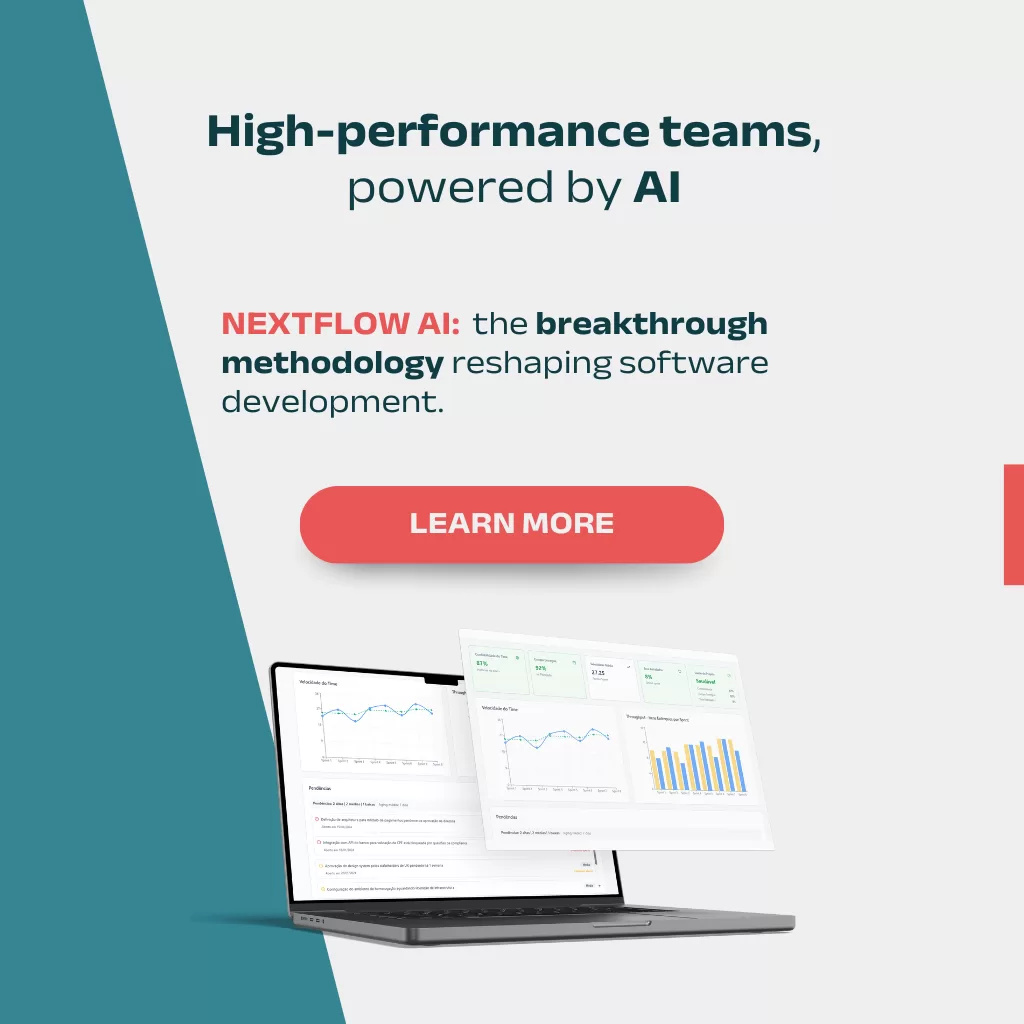
→ NextAge Nextflow AI: A proprietary methodology that integrates Generative AI directly into the project lifecycle (SDLC). The result is up to 10x faster coding and documentation, with the focus on solving complex business problems, not just repetitive tasks. Dramatically shorter time-to-market, without compromising quality.

Checklist: are you ready to hire an outsourced team?
Before signing any contract, you should be able to answer yes to most of these:
- Have I clearly mapped the technical profiles I need and the non-negotiable skills?
- Do I have clarity on the estimated duration of the project or engagement?
- Did the vendor go through a discovery phase before presenting a proposal?
- Will I be able to validate the professionals before they’re allocated (technical interview or equivalent)?
- Does the contract allow for scope adjustments and squad resizing?
- Is there a Tech Lead or technical point of contact on the vendor’s side?
- Have we defined success metrics and a review cadence from the start?
- Does the vendor have a QA process integrated into the development cycle, not just at the end?
- Do we have someone dedicated to onboarding on our side during the first few weeks?
- Does the vendor use AI in a structured way within the SDLC, and can they explain how?
If you’ve made it this far and still have questions about which path makes the most sense for your context, NextAge can help you think it through. No commitment, no sales pitch, just a conversation to understand your situation and see if it makes sense to move forward.
NextAge builds custom technology solutions and provides high-performance agile squads for companies that need to scale without the complexity of direct hiring. From the 2.0 methodologies to Nextflow AI, the focus is always the same: quality delivery, on time, and no surprises in the contract.
→ Talk to us