 English
  Português
Paraná is no longer just the state of agriculture and automotive industry. In 2024, the technology sector generated R$ 55 billion in the state, placing Paraná fourth in Brazil’s national IT ranking. Curitiba concentrates more than 57,000 jobs in technology-related activities and, in June 2026, the state government signed the order of service for the Paraná Ideas Factory: R$ 296.5 million in public investment, 50,000 m² in the Rebouças neighborhood, with a declared focus on artificial intelligence and technology startups.
This ecosystem has a direct consequence for any company evaluating a software project: Paraná combines talent density, competitive costs and companies with decades of experience in high-complexity projects. The problem is not a lack of options; it is the excess of them without clear criteria to decide.
This article presents the 10 best software factories in Paraná in 2027, the criteria used to evaluate them and a practical hiring guide. The goal is simple: to help managers and IT leaders choose the right partner for the right project, without wasting time on generic evaluations.

What is a software factory and why hire one in Paraná?
A software factory is a development model that applies standardized processes, agile methodologies and multidisciplinary teams to transform business requirements into digital products with predictable deadlines, costs and quality. Unlike outsourcing, where the company hires professionals who operate under its direct management, the factory takes responsibility for the complete development cycle: from specification to deployment. Unlike a product-focused software house, the factory works with a closed scope and acceptance criteria defined before the first sprint.
Why Paraná? Three objective reasons:
Talent density. Curitiba has approximately 15,760 active formal IT jobs and universities such as UFPR, PUC-PR and UTFPR continuously training software engineers. Between 2018 and 2025, Paraná created more than 55,000 formal jobs in high and medium-high technology activities, a growth of 36%.
Competitive cost. Professionals with technical quality equivalent to São Paulo and Rio de Janeiro, at average costs 20 to 30% lower. For medium and high complexity projects, this difference has a direct impact on the budget without compromising the level of delivery.
Mature ecosystem. The state has more than 30 technology parks and innovation environments, including Vale do Pinhão in Curitiba, internationally recognized as a smart city hub. The ICMS Paraná Inovador program offers active tax incentives for technology companies based in the state. And Paraná surpassed 2,000 active startups in 2025, with 500% growth in seven years.
How we evaluated each company on this list
No company on this list paid to appear. The profiles are based on public data from official websites, Federal Revenue records and verifiable market information. The evaluation criteria were:
Years in the market and solidity: a company with a verifiable track record represents a lower risk of project abandonment, proven ability to navigate technology cycles and real references available for consultation.
Verifiable portfolio: clients with published names, not just generic logos or mentions of “major industry companies.”
Current technology stack: command of modern technologies (cloud, AI, CI/CD, REST APIs) and not just legacy systems.
Contract model: clarity of scope, SLA, acceptance criteria and source code delivery policy.
Presence of AI in the process: in 2027, AI in development has ceased to be a differentiator and become a basic requirement for productivity and quality.
Ideal client profile: each company serves a type of project better. The list reflects this diversity.
The 10 Best Software Factories in Paraná in 2027
#10 Pollysoft — Curitiba
Pollysoft operates in the Curitiba software development market with a focus on web systems, mobile applications and process automation projects for mid-sized companies. The operational profile is that of a local software factory, with close client attention and a lean development process.
Best for: mid-sized companies with low to medium complexity projects that value geographical proximity and direct service throughout development.
Point of attention: for high technical complexity projects or those requiring teams specialized in niche technologies, evaluate the company’s technical portfolio before hiring.
#9 CITS — International Software Technology Center (Curitiba)
CITS is an entity linked to the Paraná innovation ecosystem, operating in software development with an applied research component. Unlike the other companies on this list, CITS operates at the intersection of the academic world and the market, resulting in a distinct project profile.
Best for: companies seeking software development tied to innovation initiatives, projects with public or private R&D funding and solutions that combine applied research with development.
Point of attention: the pace of projects with an academic component tends to differ from that of a purely commercial factory. For projects with a defined market deadline and no research component, other options on this list are more appropriate.
#8 X-bits — Curitiba
X-bits is consistently mentioned among the reference software factories in Curitiba, with expertise in internal systems, customized ERPs and management applications for mid-sized companies. The operational profile is centered on back-office solutions: control systems, internal process automation and integrations with existing management platforms.
Best for: companies that need custom management systems or customizations on existing ERPs, with a focus on back-office and internal processes.
Point of attention: verify the portfolio on projects similar to yours before hiring; expertise in back-office may not translate into equivalent experience for consumer-facing digital products.
#7 Infoworker — Curitiba
Infoworker is one of the regional references in on-demand software development in Curitiba, focusing on medium-complexity systems for companies that need close attention and a lean development process. The operational profile is best suited to projects with a well-defined scope, a medium-sized development team and a client that values agility in communication and decisions throughout the project.
Best for: companies that need to develop internal systems, integrations or medium-complexity web applications, with a compact team and process free of excessive bureaucracy.
Point of attention: for high technical complexity projects or those requiring large, multidisciplinary squads, companies with more robust structures on this list tend to deliver with greater predictability.

#6 Reiko Software House — Curitiba (Batel)
Founded: 2004 | Experience: 20+ years
Reiko has been operating since 2004 in the Batel neighborhood of Curitiba, with a single-responsibility model: the company takes on both the development and the hosting and support of the delivered solution. This simplifies post-project management for the client, who deals with a single vendor responsible for the complete cycle, from code to production environment.
The model is especially relevant for companies that do not have an internal infrastructure team and need to ensure that the delivered software will keep running and being maintained without depending on a third party for every issue.
Best for: SMEs and mid-sized companies that prefer a single vendor responsible for development, hosting and support, with direct contact and price transparency from the proposal stage.
Point of attention: a smaller structure limits the ability to scale quickly on large projects or those with very compressed deadlines. For enterprise projects with multiple parallel teams, the model may not accommodate the demand.
#5 Supero — Florianópolis/SC operating in Paraná
Experience: 20+ years | Staff: 300+ specialists | States served: 12
Supero is headquartered in Florianópolis but operates in a consolidated manner in Paraná and 11 other states. The technical differentiator that places it on this list is the application of AI in industrial environments: computer vision, sensors and shop floor integration are rare competencies in the Brazilian software market.
The industrial portfolio is verifiable: ArcelorMittal, ENGIE and Klabin are among its clients. For companies with physical operations that need software integrated with equipment, sensors or manufacturing processes, Supero has know-how that most software factories simply do not have.
Best for: Paraná industries that need software integrated with physical processes: equipment monitoring, process automation, computer vision on production lines, industrial IoT.
Point of attention: the industrial focus is a specialization, not a limitation to be overlooked. For digital product, fintech or management system projects without a physical component, other companies on this list have a more relevant portfolio.
#4 DB1 Global Software — Maringá
Founded: 2000 | Experience: 25 years | Staff: 800+ | Revenue (2025): R$ 202 million
DB1 is the largest technology company in northern Paraná and one of the most relevant software groups in Brazil. Founded in Maringá in 2000, it closed 2025 with R$ 202 million in revenue and projects R$ 240 million for 2026, a growth of 20%. The group has an accumulated base of 6,400 clients and operations in more than 19 countries.
In addition to custom development, the DB1 Group operates its own products (ANYMARKET, Koncili, Predize), meaning part of the team has real experience building and scaling market products, not just internal client systems.
Best for: medium and large companies that need squad scalability, formal SLAs and a vendor with proven enterprise structure. The client profile includes iFood, XP and O Boticário, indicating capacity for high-demand and business-critical projects.
Point of attention: the robust structure comes with an equivalent cost. For smaller projects or smaller teams, the enterprise structure overhead may make the commercial proposal disproportionate to the scope.
#3 ateliware — Curitiba
Founded: 2011 | Experience: 13+ years | Presence: Brazil, Belgium and USA
ateliware operates as a software atelier: a predefined number of simultaneous projects, dedicated technical leadership in each delivery and a focus on strategic alignment before any line of code is written. Founded in Curitiba in 2011, the company has offices in Antwerp (Belgium) and Florida (USA), providing real capacity to serve international clients in compatible time zones.
The track record of digital products built is verifiable: ateliware co-founded Pipefy (MVP delivered in three months, now used in more than 150 countries) and participated in the creation of Trio, which processes R$ 2 billion per month via Pix. Reference clients include BMW, ADP and Sicredi.
Best for: companies that need to build a new digital product with a discovery phase before development: hypothesis validation, architecture definition and business alignment. Also recommended for international projects requiring presence across multiple time zones.
Point of attention: the discovery phase increases the initial investment and the time until development begins. For projects with an already well-defined scope, this process may be redundant. The atelier model limits the ability to scale squads quickly.
#2 Visionnaire — Pinhais (Greater Curitiba)
Founded: 1994 | Experience: 30+ years
Visionnaire is one of the software development companies with the longest market history in Brazil, headquartered in Pinhais, in the metropolitan region of Curitiba. More than 30 years developing high-complexity corporate systems translates into proven capacity to handle difficult integrations, legacy systems and regulated environments.
The core expertise is integration with ERPs and financial systems: SAP, TOTVS, Benner, Sage and Microsoft Dynamics are part of the repertoire, as are integrations with systems from institutions such as HSBC, Tecban and Febraban. The dominant technologies include Java, .NET, C#, PHP and cloud solutions.
Best for: large corporations with legacy systems that need integration or modernization, especially in the financial, ERP and manufacturing sectors. Companies that value a vendor with a proven track record in long-duration, business-critical projects.
Point of attention: predominantly enterprise profile. For SMEs with lower-complexity projects, the structure may be heavier than the project requires, impacting cost and commercial response time.
#1 NextAge — Curitiba
Founded: 2007 | Experience: 19+ years | Projects delivered: 600+ | Presence: 10+ countries
NextAge was founded in Curitiba in 2007 and grew to serve more than 600 projects without leaving Paraná as its operational base. The portfolio is broad and verifiable: Sicredi, XP, WEG, Scania, Sanepar, Neil Patel and Camargo Corrêa are among the reference clients. The company operates in more than 10 countries and has more than 150 allocated professionals.
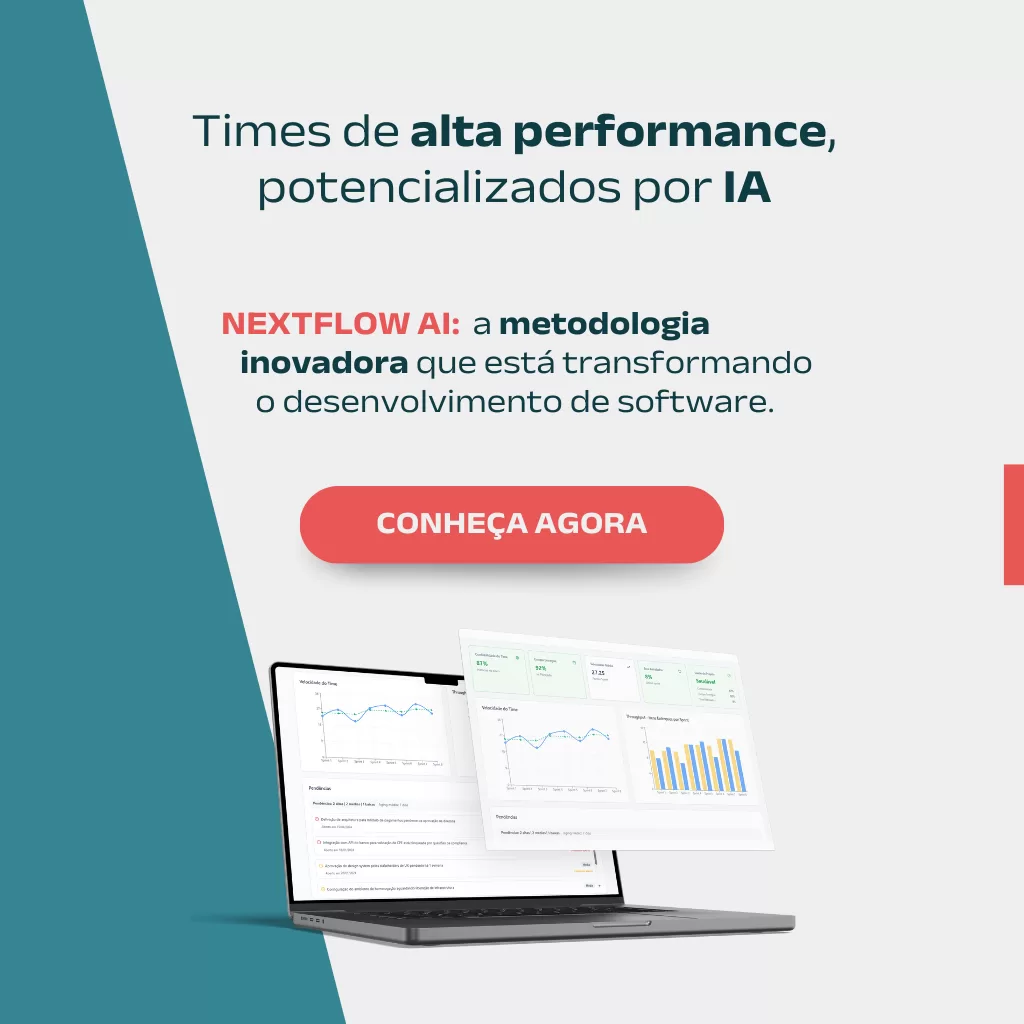
The main differentiator in 2027 is the NextFlow AI methodology: AI applied at every stage of the development cycle, from scope mapping to testing. AI-assisted planning reduces forgotten requirements before the first sprint; automated code review identifies problems before they reach the pipeline; tests cover scenarios that manual review would rarely catch. The practical result: less rework in the final sprints and more predictable deliveries.
The NextAge Software Projects service operates with dedicated full-stack squads (developers, QA, UX, DevOps and analysts), contractual SLA and closed scope. The client retains full control over product decisions; NextAge guarantees the technical execution and quality of each delivery. Professional replacement in the event of a squad member leaving is guaranteed by contract, with no impact on deadlines.
Best for: medium and large companies with strategic projects of medium to high complexity (web, mobile, cloud systems) that need deadline and cost predictability without giving up control over product decisions.
Point of attention: the model is structured for projects with a definable scope. If the company is still in a discovery phase, with many open business variables, it is worth having a conversation first about which project stage is most appropriate to begin the partnership.
Quick comparison table
| Position | Company | HQ | Years in market | Best for | AI in process |
|---|---|---|---|---|---|
| #1 | NextAge | Curitiba | 19 years | Strategic projects with SLA | ✅ NextFlow AI |
| #2 | Visionnaire | Pinhais/CWB | 30 years | Corporate and ERP integrations | Being adopted |
| #3 | ateliware | Curitiba | 13 years | Digital product with discovery | Being adopted |
| #4 | DB1 Global Software | Maringá | 25 years | Enterprise, large scale | ✅ Declared |
| #5 | Supero | SC + Paraná | 20 years | Industry and computer vision | ✅ Specialty |
| #6 | Reiko | Curitiba | 20 years | SME, single responsibility | Not declared |
| #7 | Infoworker | Curitiba | — | Medium complexity, agility | Not declared |
| #8 | X-bits | Curitiba | — | ERPs and internal systems | Not declared |
| #9 | CITS | Curitiba | — | Innovation and R&D | Under evaluation |
| #10 | Pollysoft | Curitiba | — | SME, low-medium complexity | Not declared |
How to choose the right software factory for your project
Choosing the wrong company for a software project is one of the most expensive mistakes a technology team can make: schedule delays, rework, code that nobody else can maintain. According to the Software House Panorama 2025, 41% of companies in the sector declare a lack of qualified labor as their main bottleneck, an increase of 7.5 percentage points compared to 2024. The market is full of options; technical quality is increasingly uneven.

1. Define the type of project before talking to any company
The first criterion is not the company: it is the type of demand. Projects with a definable scope (you know what you want to deliver, when you want it and what the acceptance criteria are) fit the closed-scope factory model. Projects with many open variables tend to generate rework and expectation conflicts in this format: for these cases, a discovery phase before development may be more appropriate.
If the demand is continuous and variable (a team that will evolve a product over time, without a closed scope), the outsourcing or staff augmentation model tends to be more efficient than hiring a factory per project.
2. Demand a verifiable portfolio, not just logos
Logos of large companies on a website are not a portfolio. Ask to speak with two or three real clients; a factory that does not have clients willing to take a reference call is not a safe choice. Request development process documentation, not just a commercial presentation. And verify that the published cases are for projects similar to yours in complexity, sector and technology.
3. Read the contract before signing. Demand specificity.
A serious software project contract needs to include, at minimum:
- Detailed scope: what is and what is not included
- Schedule with measurable milestones per sprint
- Acceptance criteria for each delivery
- Development SLA and bug response SLA
- Source code delivery policy at the end of the project
- Post-deployment warranty and support conditions
Proposals that arrive with only a total value and a generic deadline are a red flag. And be cautious with 100% closed-scope contracts for genuinely complex projects: agile methodologies with partial deliveries exist precisely to handle the variables that arise throughout development.
4. Ask about AI in the process and demand specificity in the answer
In 2027, every company will say it uses artificial intelligence. What differentiates them is how and at which stage. Ask directly: “At which part of the development do you apply AI and what is the measurable result?” A vague answer reveals that it is marketing positioning, not process.
AI in scope planning reduces forgotten requirements; AI-assisted code review identifies bugs before the pipeline; automated testing with AI covers scenarios that manual review does not reach; AI in documentation ensures the project does not become a black box after delivery. These are different applications, with different impacts. Companies that can answer this clearly have AI in the process for real.
5. Assess team stability
Ask about the professional replacement policy in the event of a departure. Verify whether there is a Tech Lead dedicated to your project or whether technical leadership rotates across different teams. And understand whether the team that presented the proposal is the same one that will execute it: changing professionals during development is one of the most common causes of context loss and delivery delays.
How much does it cost to hire a software factory in Paraná?
The average ticket varies according to project complexity. Medium-complexity projects (web or mobile systems with a defined scope, few integrations) range from R$ 80,000 to R$ 200,000. High-complexity projects (multiple integrations, extensive business rules, high performance, critical security) can reach R$ 500,000 or more.
For reference: according to the Robert Half 2026 Salary Guide, a senior developer costs between R$ 12,400 and R$ 20,900 per month. A squad of five professionals (senior developer, two mid-level, QA and analyst) can represent between R$ 60,000 and R$ 120,000 per month, not including the company’s margin, project management and infrastructure.
The lowest-price argument is usually a trap. A project delivered with 40% rework that took twice the planned time costs far more than a proposal 30% above average that comes with a clear SLA and well-defined scope. The real cost of software is not the initial proposal value: it is the proposal value plus the time your internal team spent managing the vendor, correcting deliveries and re-explaining requirements.
Frequently asked questions
What is a software factory?
A software factory is a company specialized in developing systems and applications through standardized processes, agile methodologies and multidisciplinary teams. The model works with a closed scope: the client defines what they want to deliver, and the factory takes responsibility for the complete development, with deadlines and quality defined by contract.
What is the difference between a software factory and a software house?
A software factory focuses on production with replicable processes, closed scope and delivery predictability. A software house tends to have an approach closer to digital product, with a discovery phase before development and greater customization per project. In practice, the models converge in many companies: the most important thing is to understand which process the company offers for your type of project.
What is the difference between a software factory and outsourcing?
In a factory, you hire the delivery of a complete project: the vendor is responsible for the result. In outsourcing (or staff augmentation), you hire professionals who work under your management: technical responsibility and project direction remain with your team. The choice depends on how much control and internal management capacity the company has available.
Is it worth hiring a software factory in Paraná instead of São Paulo?
For most projects, yes. Curitiba and Paraná have talent density comparable to São Paulo, with a lower average development cost. Most Paraná factories operate with remote teams and serve national and international clients with the same SLAs. The geographical difference is usually only relevant for projects that require frequent physical presence during development.
How do you verify whether a software factory is reliable?
Demand a portfolio with verifiable clients, ask for references to speak with previous clients, read the contract with special attention to scope, acceptance criteria, SLA and source code delivery. Serious factories do not avoid contractual details: they propose them before you ask.
How much does a project at a software factory in Paraná cost?
Medium-complexity projects range from R$ 80,000 to R$ 200,000. High-complexity projects can reach R$ 500,000 or more. The investment varies according to scope, deadline, squad size and average seniority of the professionals involved.
Conclusion
Paraná has a mature technology ecosystem, with companies that have accumulated decades of experience in high-complexity projects and a talent pipeline that grew 36% in seven years. The ten companies on this list represent distinct profiles: from factories with enterprise structure and 25 years in the market to smaller operations focused on SMEs and direct service.
The right choice is not the company with the largest portfolio or the best-known brand: it is the company whose working model, seniority level and sector experience align with the type of project you need to deliver.
If your project has a definable scope, needs deadline predictability and technical quality guaranteed by SLA, NextAge has more than 19 years developing systems for companies such as Sicredi, WEG and Scania. The process starts with a no-cost conversation: you present the project, NextAge structures the ideal squad, scope and applicable SLA. No commitment, no generic proposal.