 English
  Português
The rapid adoption of Artificial Intelligence technologies over the last five years is profoundly transforming the software development market. According to recent studies, around 92% of technology roles will require reskilling and upskilling of professionals to remain in the market, a shift that is forcing both companies and individuals to reinvent themselves.
Since its emergence, generative AI has been the fastest-adopted technology in all of history, surpassing even personal computers and the internet, according to the study “The Rapid Adoption of Generative AI” (2024), published by Harvard Business School. This pace of adoption is directly reflected in the labor market, compelling companies to choose between integrating innovative processes into their routines or falling behind. Several studies corroborate this reality, including the “State of Digital Adoption” (2024) report, which states that organizations that fail to invest in digital adoption lose, on average, $1.14 million per week in reduced productivity. The impact of AI reaches both company finances and professional careers, with workers finding themselves compelled to invest in new technical skills to remain relevant.

Currently, around 92% of technology roles are already requiring reskilling and upskilling of professionals to stay in the workforce (“The Transformational Opportunity of AI on ICT Jobs,” 2024). This pressure for qualification intensified further after the pandemic, when the rise of remote work had already raised the bar for those seeking to stand out in their careers. Among the changes brought about by this new era is the phenomenon known as vibecoding, a programming approach assisted by LLMs that allows developers to generate code simply by providing natural language descriptions. However, the practice calls for caution: AI-generated code is more vulnerable to cyberattacks, as warned by the “AI vs Human Code Generation Report” (2025).
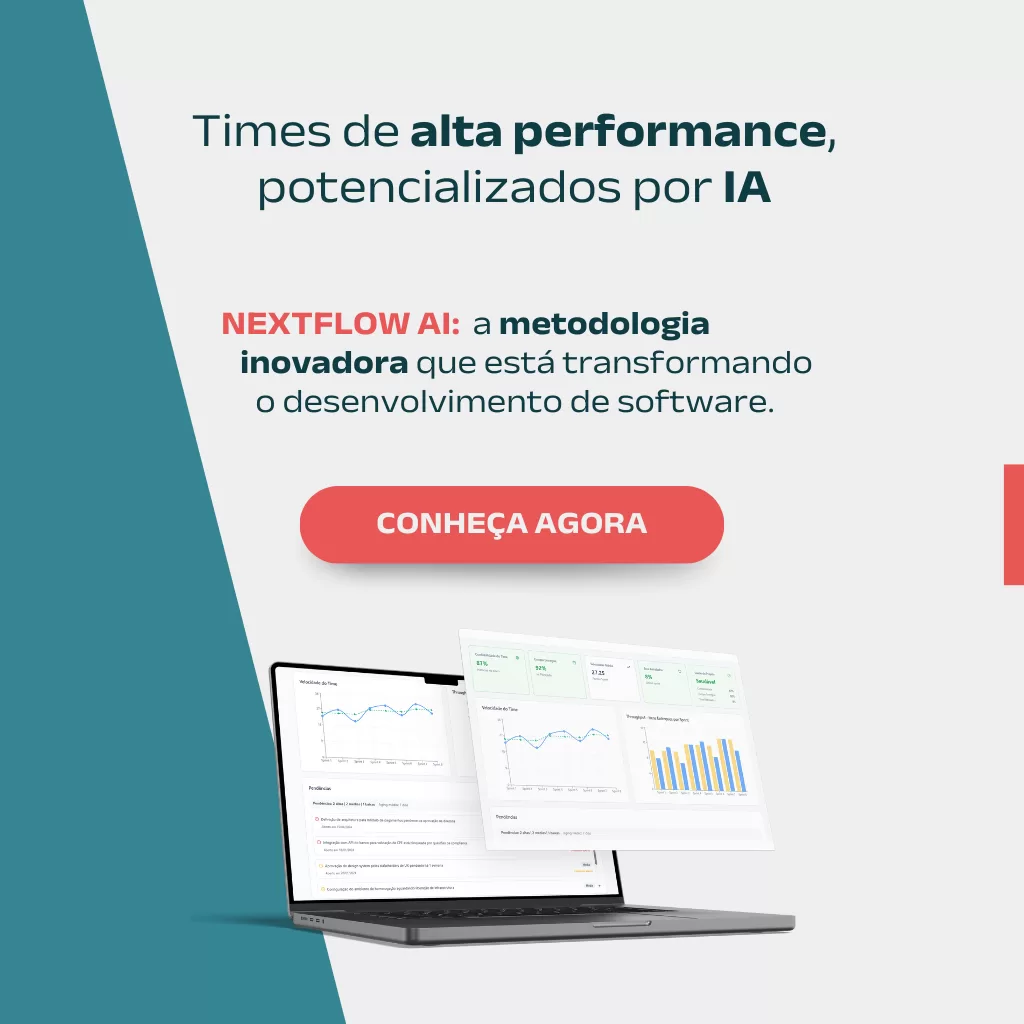
Recognizing this landscape of transformation, and understanding the need to ensure security and quality while keeping pace with the accelerated rhythm demanded by the market, software development companies are restructuring themselves to meet the growing demand from businesses seeking digitalization. The solution found was the creation of products and frameworks that combine the speed of artificial intelligence with the precision of human oversight. In this model, developers use AI-generated code as a starting point to accelerate the cycle, while retaining control over the final product.

This is the idea applied at NextAge, a software development company from Paraná, Brazil, that has developed its own working methodology combining AI and human expertise. According to Juliano Haus, Co-Founder and Executive Director of NextAge, this approach not only speeds up deliveries but also drives the professional growth of employees. “We realized that by embedding AI tools into our workflow, we could work with much greater speed, while also expanding our range with creative solutions born from a new perspective,” Haus explains.
But NextAge went beyond methodological innovation. Understanding that digital transformation must be within reach of all businesses — not just large corporations, the company evolved into a “Service as a Software” model. Unlike traditional development models, this modality operates on a monthly subscription basis, allowing companies of various sizes to access cutting-edge technology without the high upfront investments that would normally be required. NextAge’s Agentic AI model replaces hourly billing with delivery based on results and tokens, dismantling the financial barriers that previously prevented small and medium-sized businesses from competing digitally. “We built a bridge so that small and medium-sized businesses don’t get left behind in the technology race; with the AI Units subscription model, they gain access to the same resources as a big tech company, paying only for what they consume,” Haus highlights. This democratization addresses a pressing market need, as research from Shanghai University (2022) shows that 92% of SMEs believe digital transformation is crucial to their businesses.
Initiatives like these help explain why Brazil is well-positioned in the global digital race. According to the IT Fórum portal (2025), the country currently ranks 10th in the world ranking of IT investments, establishing itself as the leading emerging market in the sector. This demonstrates that the changes brought about by AI, despite initially causing uncertainty, are giving way to a new operational maturity when companies adopt the right strategies. Artificial intelligence, when integrated with adequate governance methodologies, not only accelerates the development cycle but also elevates the technical level of entire teams. The result is an industry that is more prepared, more agile, and operating with unprecedented efficiency.