 English
  Português
If you ask most people who the pioneers of programming were, the odds are high you’ll hear a man’s name. Alan Turing, maybe. Or some vague reference to “Silicon Valley engineers.” What almost no one says is: women. And that omission says a lot about how this field took shape over the decades, and why there is still so much to change.
Women’s participation in technology has grown, but it is still far from equal. Understanding where we came from, what has already been built, and what is still holding progress back is the starting point for any serious conversation on the subject. Let’s get into it.
When programming was women’s work
Few people know this, but in the 1940s and 1950s, programming was viewed predominantly as women’s work. Hardware engineering was considered a man’s domain, mechanical, physical, hands-on. Writing instructions for machines, on the other hand, seemed at the time like an extension of the administrative and computational work women were already doing in offices and laboratories.
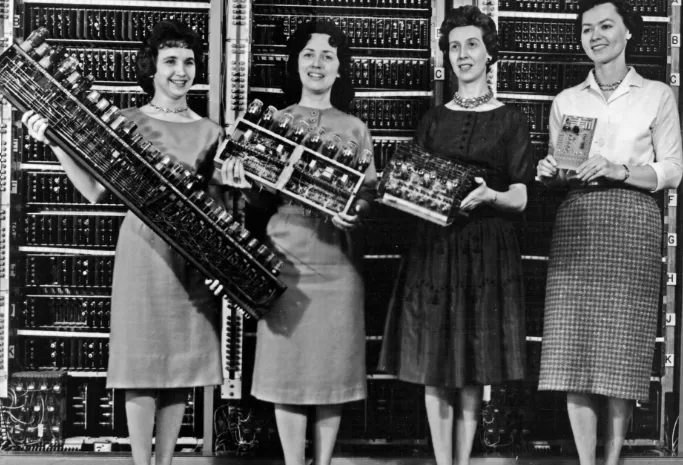
The most well-known example is the ENIAC, the first electronic computer in history, developed at the University of Pennsylvania during World War II. Before the machine existed, a team of 80 women manually calculated missile trajectories. Once the ENIAC was ready, six of those women were chosen to program it, with no manual, no documentation, only the machine’s logical diagrams. The result: calculations that used to take around 30 hours were now processed in 15 seconds.
They became known as the ENIAC Girls. For decades, their contributions were ignored or erased from the official historical record.
The pioneers who shaped modern computing
Before talking about where we are today, it’s worth getting to know who built the foundations of this field, because many of those foundations have women’s names attached to them.
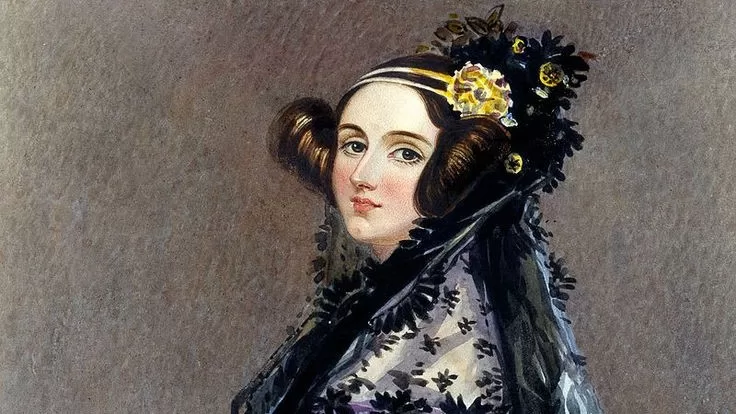
- Ada Lovelace (1843) is considered the first programmer in history. Working with Charles Babbage’s Analytical Engine in the 19th century, she developed what we now recognize as the first computational algorithm. More than that, she already envisioned that machines could go far beyond simple calculations, a vision that would only be confirmed a hundred years later.
- Hedy Lamarr was a film actress, but also an inventor. In 1942, during World War II, she patented a frequency-hopping signal system to prevent radio-controlled torpedoes from being intercepted. That principle forms the basis of technologies like Bluetooth and earlier versions of Wi-Fi.
- Grace Hopper (1952) was responsible for creating COBOL, one of the first business-oriented programming languages, and popularized the idea that computers could be programmed in a language closer to English, opening the door for every language that followed. She was also the first to use the term “bug” to describe a system failure, after literally finding a moth causing errors inside a computer.
- Mary Kenneth Keller was the first woman in the United States to complete a PhD in Computer Science, in 1965. Throughout her career, she was a strong advocate for the use of computers in education.
- Margaret Hamilton (1969) led the team that developed the flight software for the Apollo missions, including Apollo 11, the mission that landed the first humans on the Moon. In 2016, she received the Presidential Medal of Freedom for that achievement.
- Radia Perlman is often called the “mother of the Internet.” She developed the Spanning Tree Protocol, a critical technology that allows data to flow through networks efficiently and without loops, something that runs silently in the background every time you visit a website.
- Katherine Johnson was the NASA mathematician whose calculations were crucial to the first crewed American spaceflights. Her story was told in the 2016 film Hidden Figures.
- Frances Allen became, in 2006, the first woman to win the Turing Award, the highest recognition in computer science, often compared to a Nobel Prize. She spent decades at IBM and was a pioneer in compiler optimization.
What happened in the 1980s?
Given such a rich history of female participation, how did we end up in a scenario of under-representation? The answer lies in a seemingly small market decision that changed everything.

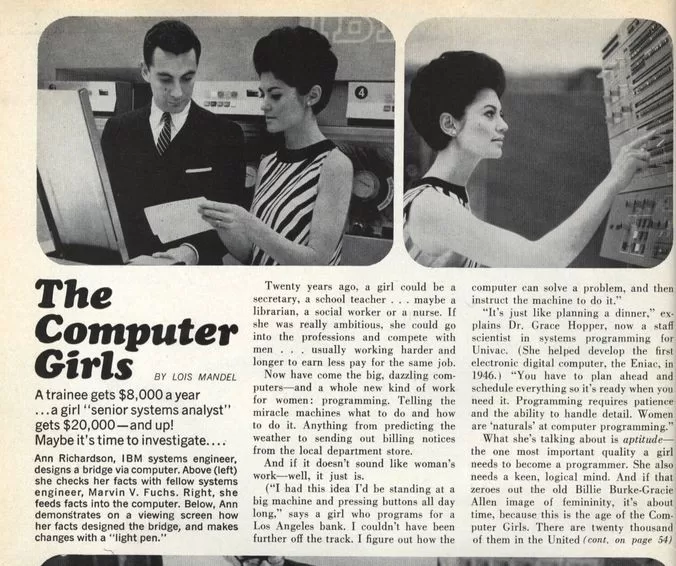
In the mid-1980s, the video game industry exploded. With it came a practical question: which aisle of the store should computers and consoles go in? The decision was to place them on the boys’ toys side. Marketing followed that logic: commercials featured boys. Films of the era, like WarGames and Weird Science, reinforced the stereotype of the programmer as a young, nerdy, socially awkward guy.
The effect was immediate and lasting. Girls were actively discouraged from taking an interest in computing. Those who did anyway encountered hostility, exclusion, and a persistent sense of not belonging.
The numbers tell this story clearly: the share of women enrolled in Computer Science programs in the U.S. began declining sharply from the mid-1980s onward, unlike fields like Law, Medicine, and Biology, which kept growing. That decline has never been fully reversed.
What about now?
The good news is that the movement is growing. Communities like PyLadies, Black Girls Code, Girls Who Code, and WomakersCode are engaging more and more women across Brazil and the world, building support networks, running technical events, and offering mentorship programs.
But the data shows there is still a long way to go.
According to CompTIA’s State of the Tech Workforce 2024 report, women hold around 27% of technology jobs in the U.S., while making up nearly half of the overall workforce. In Europe, the gap is even wider: only 22% of tech roles are held by women, according to data from Revolent.
When the focus shifts to leadership positions, the numbers drop further. Only 11% of executive roles at technology companies are held by women, according to McKinsey (2024). And in artificial intelligence, one of the fastest-growing and most consequential areas of tech, only 12% of researchers worldwide are women.
On pay, the disparity persists as well: for every dollar earned by a man in the tech sector in the U.S., a woman earns roughly 84 cents, according to the U.S. Census Bureau (2024).

Why gender diversity makes technology better
This is not just a matter of fairness. It is a matter of the quality of the products, services, and decisions that technology produces.
When teams are homogeneous, blind spots multiply. A concrete example: facial recognition systems built without diversity in teams and training datasets have shown significantly higher error rates when identifying women and Black individuals. Not out of bad intent, but out of limited perspective.

The evidence on the performance of diverse teams has been consistent for years. According to McKinsey’s Diversity Matters Even More report (2023), companies with greater gender diversity in leadership are 39% more likely to financially outperform their less diverse peers. BCG found that management teams with greater diversity generate 19% more innovation-driven revenue compared to more homogeneous teams.
These numbers have their limitations, correlation is not causation, as McKinsey itself acknowledges. But the underlying logic holds: whoever builds the technology determines who it works well for. A sector with more varied voices makes more complete decisions.
Challenges that still exist
It would be dishonest to stop the picture here. Women’s presence in tech has grown, but retention remains a serious problem. According to data from McKinsey and Accenture (2024), 56% of women leave their tech careers before reaching senior positions, a figure that demands explanation.
The imposter syndrome, the feeling of not being good enough, of being somewhere you don’t belong, affects women in tech disproportionately. It is reinforced by environments where female role models are scarce and where women’s contributions are routinely questioned or credited to others.
Harassment and hostility are still present. According to data compiled by the WomenTech Network, 48% of women in STEM roles report having experienced discrimination during a hiring process. Inside companies, 72% of women in tech say they are outnumbered in work meetings by at least a 2-to-1 ratio.
Lack of a clear career path also weighs on decisions: 66% of women in tech report not having clarity on how to advance within their companies.
And there is the double barrier faced by Black women, who navigate gender and racial biases simultaneously, which makes representation data even more critical when broken down by that specific lens.
NextAge: more than code. People
At NextAge, we work every day on software development for companies pursuing digital transformation. Within that, one of the things that matters most to us is recognizing that quality technology starts with quality teams, teams that reflect the diversity of society and that make room for different perspectives.
We acknowledge the contributions of the women who built this field and believe that encouraging their entry, retention, and growth in the industry is not a symbolic gesture: it is part of what makes technology better.
If you are looking for partners to build IT solutions with qualified teams committed to delivering results, NextAge can be that partner. Talk to our team.