 English
  Português
Choosing the right programming language for a project is a decision that can determine an application’s success or failure. While some languages have dominated the market for decades, others emerge to solve problems that previously seemed impossible to overcome. This is exactly where Rust comes in.
Created in 2010 by Mozilla, Rust has won over developers worldwide by promising something that seemed incompatible: low-level performance with modern safety. And it’s not an empty promise. Since 2016, Rust has led as the most loved language by developers in the Stack Overflow Developer Survey, maintaining this title for eight consecutive years through 2023.
In this article, you’ll understand what makes Rust so special, when it makes sense to use it, and how to evaluate whether it’s the right choice for your next project.
What is Rust?
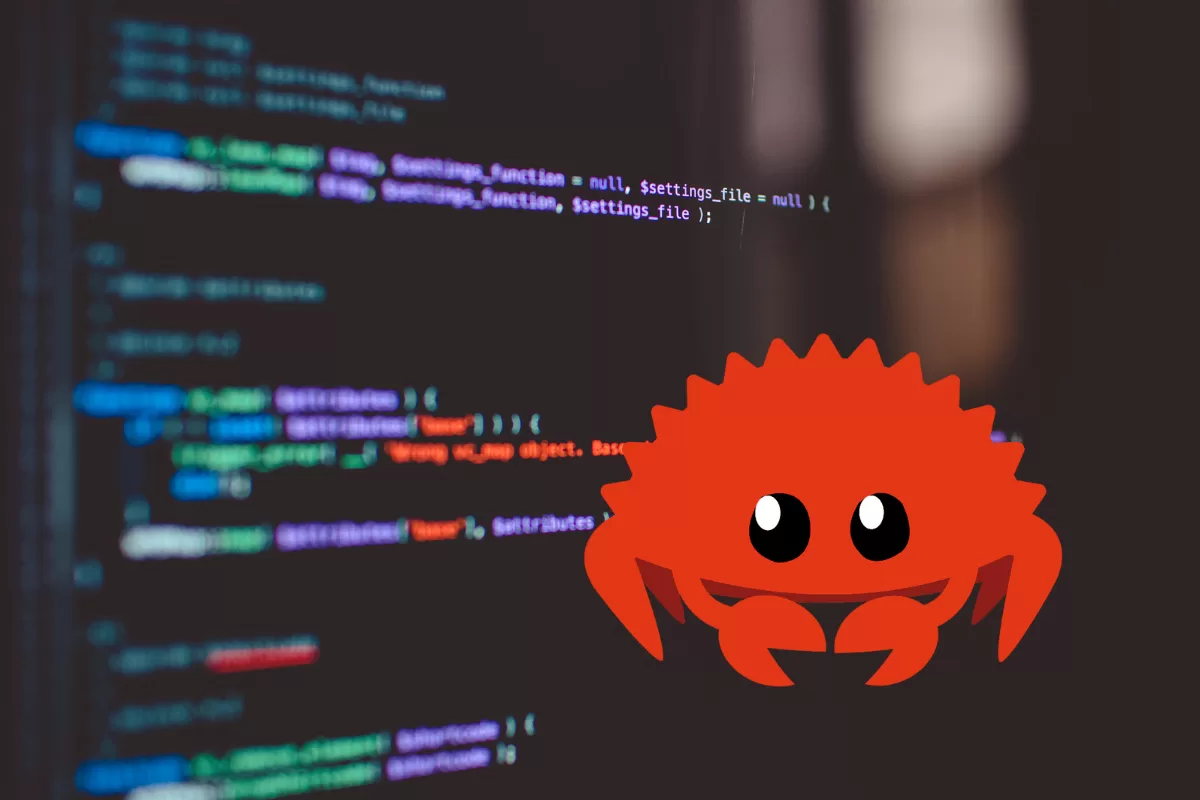
Rust is a systems programming language that combines the performance of C and C++ with modern memory safety features. Initially developed by Graydon Hoare as a personal project and later adopted by Mozilla, it was designed to eliminate an entire category of bugs that historically cause security vulnerabilities and software crashes.
Rust’s major innovation lies in its ownership system, which guarantees memory safety without needing a garbage collector. This means you have fine-grained control over system resources, like in C++, without the risks of memory leaks, null pointers, or race conditions.
Technically speaking, Rust is a compiled, strongly typed language that offers zero-cost abstractions. In other words: you write high-level, expressive, and safe code, and the compiler generates binaries as efficient as hand-optimized C code.
Why is Rust gaining so much attention?
The answer lies in the numbers. According to the Linux Foundation report (2023), Rust was the fastest-growing language in adoption for critical infrastructure projects, with a 50% increase in the number of contributors to open source repositories.
Additionally, Microsoft revealed that approximately 70% of security vulnerabilities in its products are related to memory issues. Rust eliminates these vulnerabilities by design. It’s no coincidence that the company has started rewriting critical Windows components using the language.

Google, Amazon, Discord, Cloudflare, and Meta have already adopted Rust in production. The Linux kernel, after more than 30 years exclusively in C, began accepting Rust code in 2022. This movement isn’t happening due to hype, it’s because the language solves real problems that cost millions in maintenance and security.
Netflix uses Rust to optimize streaming delivery, reducing latency. Discord migrated critical services from Go to Rust and managed to reduce latency spikes by up to 10x. These aren’t isolated cases, they’re practical demonstrations that the language delivers what it promises.
When to use Rust? Practical use cases
Rust shines in specific scenarios. Understanding when it’s the best choice avoids frustrations and ensures you’re using the right tool for the right problem.
- Operating systems and drivers are natural territory for Rust. If you’re building components that interact directly with hardware or need absolute control over resources, Rust offers this capability without C’s risks.
- Command-line tools benefit from the compilation speed to native binaries and low memory consumption. Projects like ripgrep (search tool) and exa (alternative to the ls command) demonstrate how Rust can create extremely fast and reliable CLIs.
- WebAssembly is another area where Rust excels. The language compiles to WASM efficiently, allowing high-performance code to run directly in the browser. Figma, for example, uses Rust compiled to WebAssembly in critical parts of the editor.
- High-performance backends that need to handle millions of requests per second find a viable alternative in Rust. APIs that process real-time data, messaging systems, and critical microservices are natural candidates.
- IoT and embedded systems leverage fine-grained memory control and the absence of a garbage collector, essential when you have limited resources and need predictability in application behavior.
- Blockchain and cryptocurrencies frequently choose Rust for its combination of performance and security. Solana, one of the fastest blockchains on the market, is built in Rust.

Challenges and learning curve
It would be dishonest to talk only about advantages. Rust has a learning curve considered steep, especially for those coming from languages with garbage collectors. The compiler is extremely rigorous and will reject code that in other languages would simply run (and break later, in production).
According to the State of Rust Survey 2023, 32% of developers who start with Rust consider the ownership system the biggest initial obstacle. However, 89% of those who overcome this barrier report that productivity increases significantly after 3-6 months.
Compilation time can be longer than in interpreted languages or those with simpler compilation. For large projects, this can impact the development cycle. The team needs to be prepared for this trade-off.
The ecosystem, despite growing, is still smaller than established languages like Python or JavaScript. You won’t always find a ready-made library for specific use cases, requiring proprietary development or integration with other languages.
Developers coming from other languages need to rethink patterns. Solutions that work in Java or Python may not translate directly to Rust. This isn’t necessarily bad, just different.
How to get started with Rust?
If you’ve decided to explore Rust, the path is more accessible than it seems. The official documentation is the ideal starting point, especially “The Rust Programming Language,” known as “The Rust Book,” available for free online.
Install rustup, the official tool that manages compiler versions and related tools. With one command, you have the entire environment configured. Cargo comes bundled and will be your constant companion for creating projects, managing dependencies, and running tests.
Practical exercises make a difference. Rustlings offers small challenges that teach concepts gradually. Exercism has a complete track with community mentorship.
Brazilian communities are growing. Rust Brasil on Telegram and the Discord Rust Brasil server are active spaces where you can ask questions and exchange experiences.

Choosing the right stack for your project
Learning Rust is one path, choosing when to use it is another. The perfect technology on paper can be the wrong choice for your business’s specific context. This is where technical experience and strategic vision make all the difference.
At NextAge, we work with teams that master not only Rust but dozens of other languages and frameworks. Our differentiator isn’t in pushing a specific technology, it’s in making the right match between business challenge and technical solution.
Through Deep Discovery, we conduct a deep immersion into your business model before defining any architecture. We analyze performance requirements, deadline constraints, team maturity, and scale projections. Only then do we recommend the ideal stack, whether it’s Rust, Go, Python, Node.js, or a combination of them.
Rust might be the perfect choice for that critical microservice processing millions of transactions, while the rest of the architecture uses more agile technologies for less sensitive areas. This systemic vision avoids over-engineering and ensures that each technical decision serves the final objective: delivering value.
Want to understand if Rust (or any other technology) makes sense for your next project? Let’s talk. Our team is ready to help you make assertive technical decisions that drive your business forward.
Contact NextAge and discover how we can accelerate your digital transformation with the right stack and the right experts.