 English
  Português
With each passing sprint, the gap between those who deliver fast and those who deliver with long deadlines widens. According to the Accelerate State of DevOps 2024 report, efficient teams deploy 208x more frequently and recover from failures 106x faster than low-performing teams. This difference is merely a result of how work is structured.
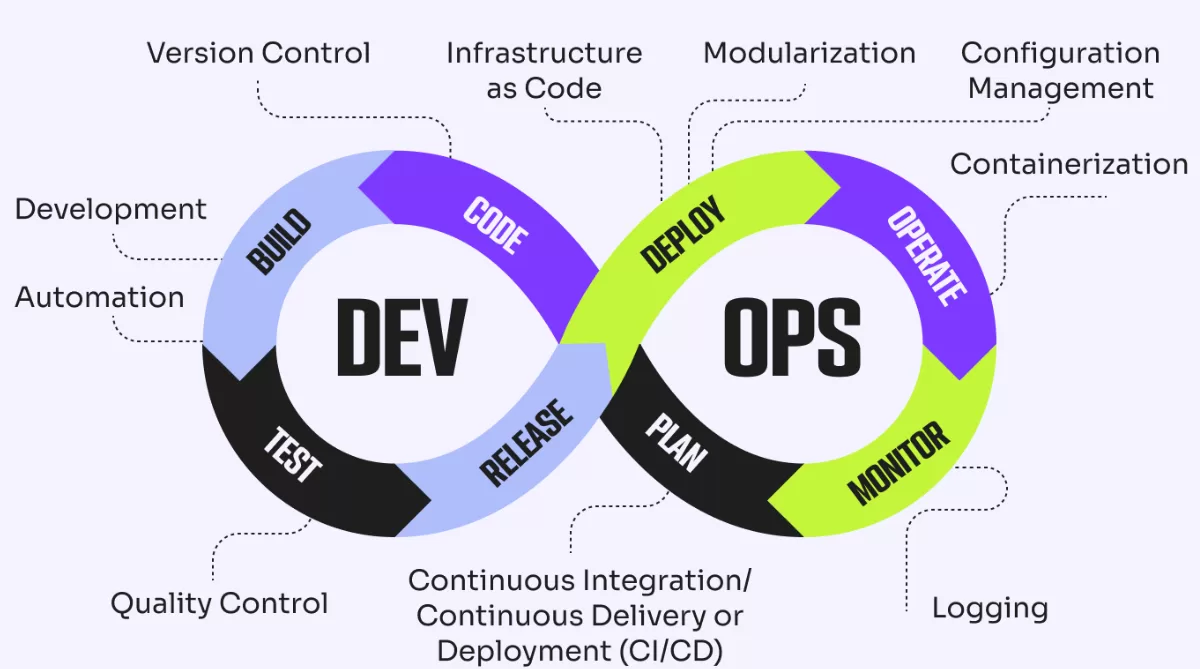
Currently, DevOps is a basic requirement for any development company. The methodology integrates development and operations into a continuous flow, eliminating bottlenecks that delay deliveries and compromise system stability. This article presents the DevOps practices your team needs to know.

1. Process Automation
Writing code can be fast. Waiting for manual approvals, running tests one by one, and deploying on Friday nights are the slow parts. Automation solves this.
CI/CD (Continuous Integration and Continuous Delivery) ensures that every code change is automatically built, tested, and prepared for production. According to Puppet research, teams that adopt DevOps show 440% higher deployment frequency and recover from problems 96% faster. When the pipeline works on its own, developers focus on solving business problems instead of managing infrastructure.
Infrastructure as Code (IaC) allows you to version infrastructure the same way you version code. Servers, databases, and network configurations are defined in files that can be reviewed, tested, and replicated. Manual configuration errors cease to exist.
At NextAge, the Quality Center applies AI-powered automation in specialized squads, creating an independent validation layer that detects failures before production. The combination of QA specialists with artificial intelligence ensures that software is delivered without critical defects.
2. Collaboration Culture Between Dev and Ops
It’s important to avoid blind spots. When developers don’t know the infrastructure and operations don’t understand the code, poor decisions are made. Cross-functional teams eliminate this fragmentation.
Shared responsibility over the entire software lifecycle means that whoever writes the code also cares about monitoring, performance, and incidents.
Transparent communication and accessible documentation prevent dependencies. When critical information is locked in one person’s head, the entire team is held hostage. Updated and centralized documentation allows anyone on the team to solve problems without waiting for someone specific.
3. Continuous Monitoring and Observability
Monitoring reacts to problems and observability anticipates problems. The difference lies in understanding not only that something broke, but why it broke and what the context is.
Metrics that matter include latency (how long it takes), error rate (how many requests fail), saturation (how full the system is), and throughput (how many operations are processed). These four categories form the Golden Signals model, widely adopted in reliability engineering.
Centralized logs and distributed tracing allow you to follow a request from start to finish, even when it passes through dozens of different services. When a user reports slowness, there’s no need to guess where the problem is, the data shows it.
NextAge’s System Sustainment 2.0 acts proactively in maintaining and evolving existing software. The team monitors trends, identifies degradations before they become crises, and keeps critical systems stable and updated.

4. Version Control and Configuration Management
Git is the market standard because it solves the fundamental problem of collaborative code work. Branches allow you to develop features in isolation. Merge requests create review points where code is evaluated before entering the main base. This shows us that code review is quality assurance.
Dependency management and semantic versioning avoid the “works on my machine” case. When all dependencies are explicit and correctly versioned, reproducing environments is no longer a mystery.
Environment-specific configurations (development, staging, production) ensure that changes are tested progressively.
5. Fast Feedback and Continuous Improvement
Short development cycles allow you to validate hypotheses quickly. Sprints and frequent releases mean that errors are detected early, when they’re still cheap to fix. The longer a feature stays in development without going to production, the greater the risk of building the wrong thing.
Essential DevOps metrics, known as DORA metrics, include deployment frequency (how often deployments happen), lead time (how long it takes from idea to production), MTTR (how long to recover from a failure), and change failure rate (how many deployments cause problems). The DORA 2024 report analyzed over 39,000 professionals and showed that high-performance teams maintain failure rates below 15% and recover from incidents in less than a day.
Blameless technical retrospectives and postmortems create space to learn from mistakes. When the reaction to a problem is to find someone to blame, teams hide failures instead of solving them. When the reaction is to understand what broke in the process, systems improve.
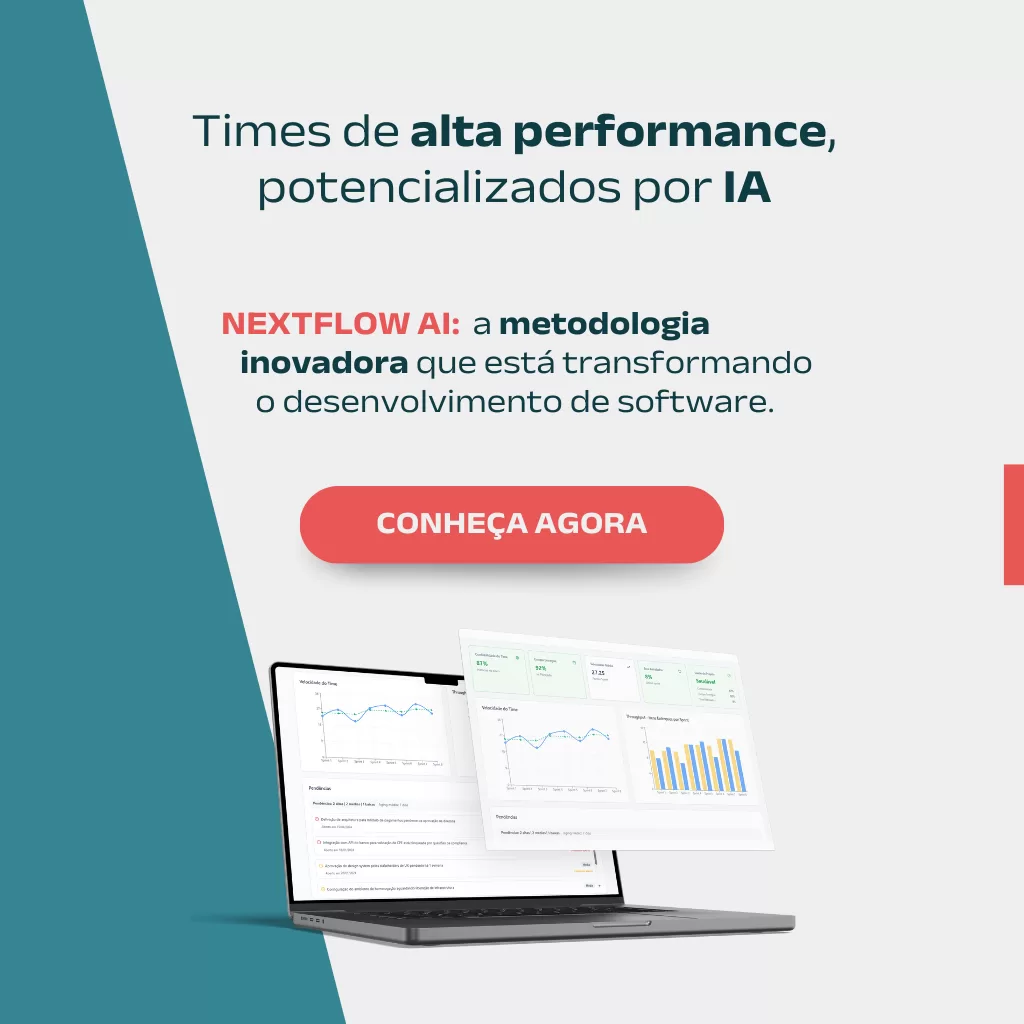
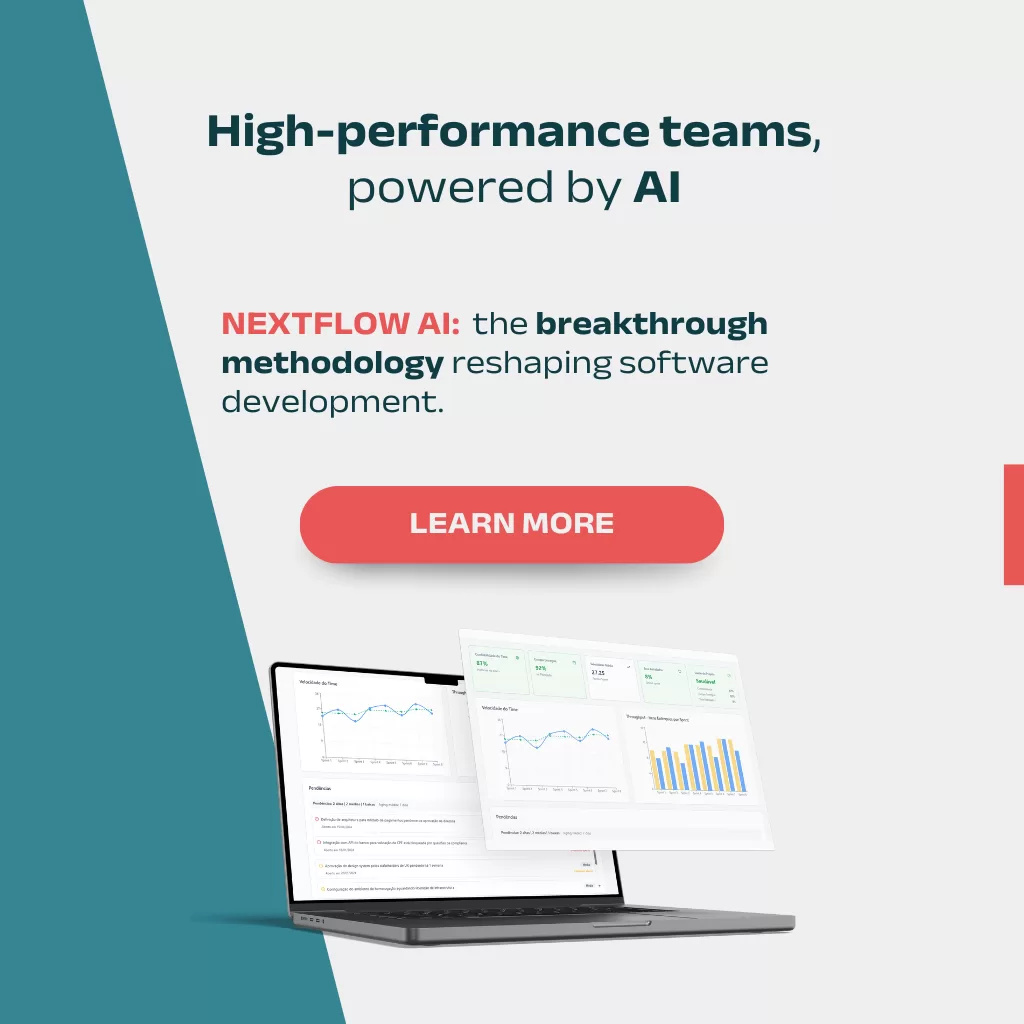
NextAge’s Nextflow AI accelerates this feedback cycle by automating repetitive development tasks. Generative artificial intelligence integrated into the SDLC allows developers to increase coding and documentation speed by up to 10x, drastically reducing time-to-market.
6. Security Integrated from the Start (DevSecOps)
Security must be a priority. When security testing happens only at the end of development, fixing vulnerabilities means redoing work. Shift-left security brings security to the early stages of the pipeline.
Static code analysis (SAST) identifies vulnerabilities directly in the source code. Dependency analysis (SCA) checks whether third-party libraries have known flaws. These checks happen automatically with each commit.
Automated security testing includes verification of authentication, authorization, SQL injection, cross-site scripting, and other common vulnerabilities. Tools run these tests without manual intervention.

Compliance and continuous auditing ensure that regulatory requirements are met in all environments. LGPD, SOC 2, ISO 27001, whatever the framework is, automated checks confirm compliance with each deployment.
7. Strategic Planning Before Code
Starting to code without solid planning is a recipe for waste. According to industry research, companies with mature DevOps practices spend 22% less on unplanned work and rework. This difference comes from validating architectural decisions before committing resources.
Technical and business feasibility validation aligns expectations among stakeholders. Not every brilliant idea is technically feasible. Not every technically possible feature generates business value.
NextAge’s Deep Discovery is an immersion phase that happens before any line of code is written. Specialists collaborate with stakeholders to define user journeys, software architecture, and prototyping, ensuring that the final product is viable, scalable, and aligned with market objectives.
8. Flexibility Without Losing Control
Fixed scope offers financial predictability but stifles changes. Agile approach allows adaptation but scares CFOs. The tension between these two models paralyzes decisions.
NextAge’s Referential Scope breaks with the rigidity of traditional fixed-scope contracts. The model offers a well-defined financial and timeline north star, but guarantees freedom to adjust priorities as the market demands. This avoids waste on obsolete requirements and always directs investment toward what brings the most value.
Implementing DevOps Involves People, Processes, and Tools
The practices listed here don’t work in isolation. Automation without collaboration generates pipelines that no one understands. Monitoring without a culture of improvement generates dashboards that no one looks at. Tools without clear processes generate complexity instead of efficiency.
DevOps is a journey of constant evolution, not a project with a completion date. High-performance teams built capabilities progressively, experimented, failed, and adjusted.
Organizations that consistently apply DevOps practices reduce operational costs, accelerate deliveries, and maintain more stable systems. According to consolidated industry data, 99% of organizations that implemented DevOps report positive impact, with 87% indicating direct improvement in customer satisfaction.
The Right Partner Makes All the Difference
NextAge applies it daily. Whether through the Outsourcing 2.0 model with agile squads and dedicated Tech Leads, System Sustainment 2.0 that keeps applications running without setbacks, the Quality Center that automates the testing stage, or Nextflow AI that multiplies developer productivity, NextAge is prepared to accelerate your team’s digital transformation.
Want to understand how to apply these practices in your specific context? Get in touch for a conversation.