 English
  Português
Artificial intelligence is no longer just a technology that processes data on screens and servers. Now, it’s gaining a shape, literally. Robots that learn to assemble complex products, vehicles that navigate autonomously in industrial environments, and systems that physically interact with the world around them represent a new frontier: Physical AI.
This evolution marks a fundamental shift in how companies can automate operations, gain efficiency, and solve problems that previously required exclusively human presence. NextAge closely follows these trends to develop solutions that prepare our partners for a future where technology integrates increasingly naturally into the physical work environment.
What is physical AI?
Physical AI is artificial intelligence capable of interacting directly with the physical world through robots, sensors, and autonomous systems. While traditional AI works with digital data, analyzing texts, generating images, or making predictions, Physical AI needs to understand and navigate real three-dimensional environments, with all their variables and unpredictabilities.
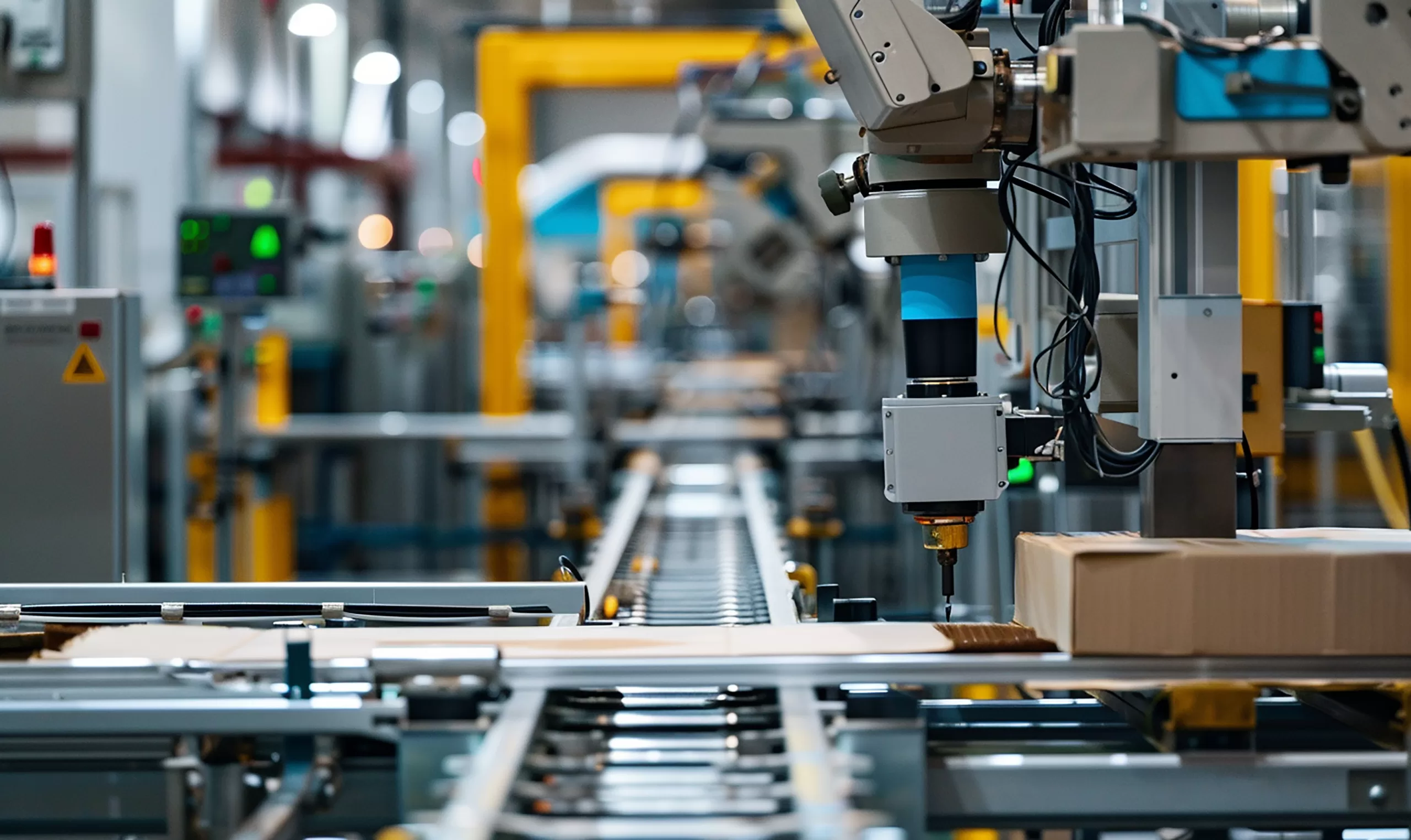
The difference lies in the complexity of the challenge. A chatbot processes language in a controlled and predictable environment. A robot on a production line, however, needs to identify parts with irregular shapes, calculate movement trajectories in real-time, and adjust its force according to the material it’s handling.
To function, Physical AI combines several technological components:
- Digital simulation: virtual environments where robots train millions of scenarios before touching the real world
- Computer vision: ability to interpret images and videos to understand the surrounding space
- Reinforcement learning: technique that allows systems to learn through trial and error, like a human would learn a new skill
- Advanced sensors: devices that capture information about temperature, pressure, distance, and movement
In a traditional automotive factory, industrial robots follow fixed programming to weld parts always in the same positions. With Physical AI, these robots can identify variations in parts, automatically adjust their movements, and even learn new tasks by observing human demonstrations, without the need for complete reprogramming.
How Physical AI works in practice
The development of Physical AI systems follows a specific cycle that reduces risks and accelerates learning. Everything begins in digital simulation, where engineers create exact virtual replicas of the real environment, the so-called digital twins.
In these synthetic environments, robots can train 24 hours a day, 7 days a week, testing millions of scenarios without risks of accidents or material waste. A robot can learn to handle fragile objects by dropping thousands of virtual items until mastering the technique, something that would be unfeasible (and expensive) in the physical world.

According to a Deloitte report on technology trends for 2026, companies that use simulation before physical implementation manage to reduce development time by up to 50% and significantly decrease operational failures.
After virtual training comes the validation phase in the real world. Here, technologies like IoT (Internet of Things) come in to connect sensors and devices, and edge computing to process information locally, without depending on connection to distant servers, essential when every millisecond counts.
Use cases are diverse and growing. In manufacturing, robots equipped with Physical AI perform assembly tasks that require variable precision. In logistics, autonomous systems organize entire warehouses without human intervention. In agriculture, machines identify pests in crops and apply pesticides only where necessary. In healthcare, robotic assistants help in surgeries and patient rehabilitation.

Why Physical AI is considered the next wave of AI
Current artificial intelligence, despite being impressive, has a fundamental limitation: it’s confined to the digital world. It can write sophisticated texts, generate realistic images, and analyze patterns in large volumes of data, but it cannot perform physical work.
This barrier prevents AI from transforming entire sectors of the economy that depend on physical interaction. Manufacturing, for example, represents about 16% of global GDP according to World Bank data, and much of the processes still depend on manual work or limited automation.
Physical AI removes this barrier. According to NVIDIA, one of the main companies investing in this technology, the AI-enabled robotics market could move trillions of dollars in the coming decades, transforming traditional industries.
The impact on productivity is considerable. Factories implementing Physical AI systems report operational efficiency increases between 20% and 40%, according to World Economic Forum data. This happens because these systems work uninterruptedly, make fewer errors, and adapt quickly to changes in production demands.
Beyond efficiency gains, there’s another important factor: Physical AI allows companies to perform tasks that were previously simply impossible to automate. Jobs that require constant adaptability, contextual judgment, and delicate manipulation now become candidates for intelligent automation.
Challenges and important considerations
Implementing Physical AI isn’t simply buying robots and putting them to work. The technical complexity is significant because it involves perfect integration between hardware and software, two areas that traditionally evolve at different speeds.

Initial costs represent a real barrier. Beyond physical equipment, it’s necessary to invest in processing infrastructure, simulation systems, high-precision sensors, and especially specialized expertise. These aren’t plug-and-play technologies.
The security issue also deserves attention. When autonomous systems interact with the physical environment, failures can have consequences that go beyond bugs in traditional software. A robot that incorrectly interprets its environment can cause accidents, damage equipment, or put people at risk.
Reliability is another critical point. In industrial environments, unplanned stops are expensive. Physical AI systems need to demonstrate consistency and predictability before assuming critical functions in operations.
Finally, successful implementation requires partners who understand both the technology and the specific business context of each company. Each implementation needs to be designed considering current processes, strategic objectives, and operational constraints of each organization.

NextAge + AI
NextAge positions itself as a company constantly looking for technological innovations that can generate real value for our clients. Following trends like Physical AI means understanding how these technologies can be practically applied to the specific challenges of the companies we work with.
Our NextFlow AI methodology already incorporates artificial intelligence directly into the software development cycle, allowing teams to deliver solutions up to 10 times faster by automating repetitive tasks and focusing on complex problems.
We develop custom solutions that consider each partner’s unique context. Whether through our own staff augmentation model, which allocates agile and technically validated squads to accelerate digital transformations, or the Quality Center, which ensures technical excellence through independent validation and AI-powered automation, we offer the technical capacity necessary for highly complex projects.
Get in touch to explore together how to prepare your company for the future of artificial intelligence.