 English
  Português
You’ve probably used the terms “free software” and “open source” as if they were the same thing. Don’t worry, this is very common. The truth is that there is a difference between these concepts, and understanding it can completely change how you develop, choose, and work with technology.
Knowing how to distinguish free software from open source isn’t just a technical matter. For companies developing IT projects, this understanding directly impacts decisions about licensing, costs, legal risks, and even innovation strategy. Let’s explore this topic in a practical and objective way.
What is free software?
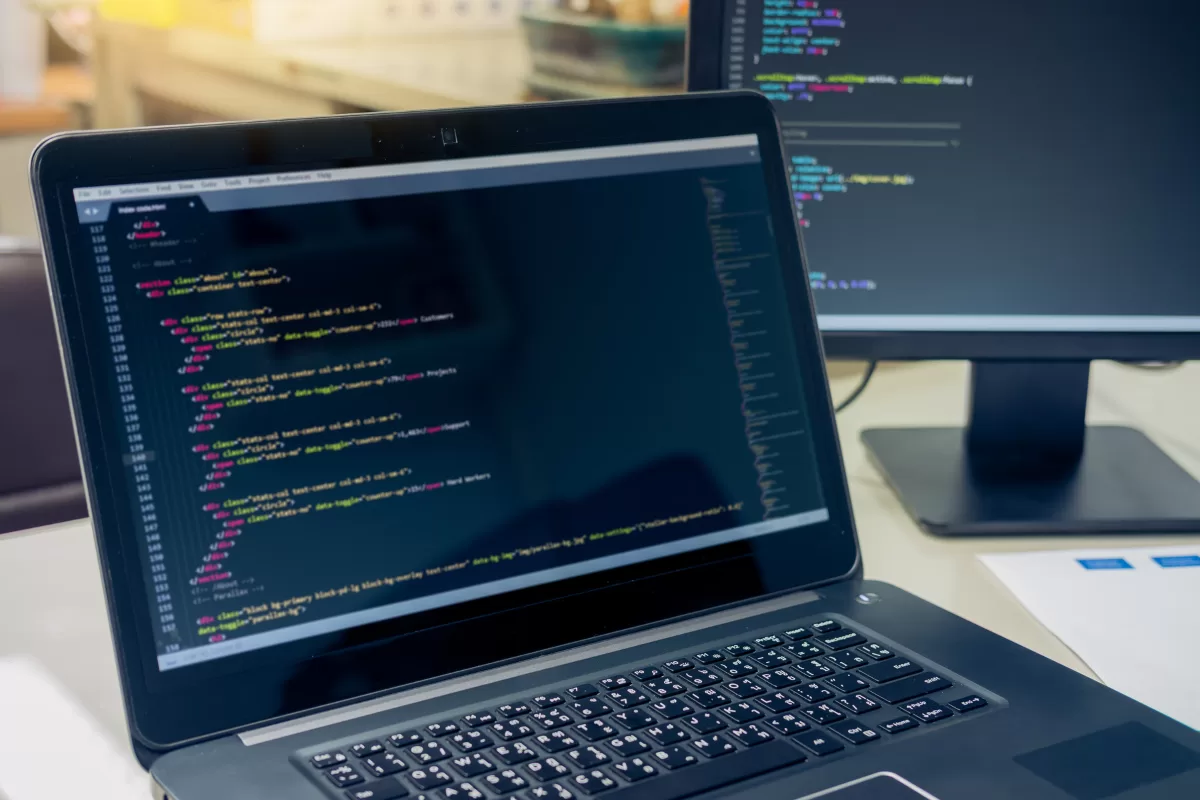
Free software is, above all, a matter of freedom. The concept was born in 1985, when Richard Stallman founded the Free Software Foundation (FSF) and established four essential freedoms that define what truly free software is:
- Freedom 0: run the program as you wish, for any purpose.
- Freedom 1: study how the program works and adapt it to your needs (access to source code is fundamental here).
- Freedom 2: redistribute copies to help others.
- Freedom 3: distribute copies of your modified versions, so the entire community can benefit.
The free software movement has philosophical and ethical roots. Stallman believed that software should be shared freely, without proprietary restrictions that would prevent collaboration and technological advancement. The GNU project and the emergence of GNU/Linux in 1991 (with the kernel developed by Linus Torvalds) are historical milestones of this movement.
It’s worth emphasizing: “free” here has nothing to do with price. Free software can be paid for, as long as it guarantees the four freedoms to users.
What is open source?
The term “open source” was created in 1998 by Christine Peterson and popularized by the Open Source Initiative (OSI). The motivation was to present a more commercially attractive alternative for large companies, separating the philosophical discourse of free software from a more pragmatic, results-focused approach.
The open source definition establishes that source code must be publicly available and allow modifications and redistribution, but with a focus on practical benefits, such as collaborative development, code quality, accelerated innovation, and cost reduction. Open source doesn’t carry the same ideological baggage as free software; its goal is to show that open software works better from a technical and economic standpoint.
According to the World of Open Source: 2024 Global Spotlight Insights report from the Linux Foundation, 68% of respondents believe that open source software is more secure than closed-source software. Additionally, companies that adopt open source report three main benefits: innovation, standardization/interoperability, and productivity, each cited by at least 57% of respondents.
The differences
Although the concepts overlap considerably, there are important differences:
- Philosophy versus pragmatism: free software is grounded in ethical principles about user freedom. Open source emphasizes the practical and methodological benefits of collaborative development.
- Licensing: free software generally adopts licenses like GPL that explicitly guarantee the four freedoms. Open source accepts a wider variety of licenses, some allowing restrictions that wouldn’t be accepted by the FSF.
- Community and governance: although both depend on collaboration, the community’s stance differs. Free software tends to be more ideological, while open source is more commercial and results-oriented.
A simple way to understand: all free software is open source (because it needs to have open code), but not all open source is free software (because it may have restrictions that violate the four essential freedoms).
How does this matter for companies?
The adoption of open technologies is growing. According to the State of the Software Supply Chain 2024 report, based on data from over 7 million open source projects, it’s estimated that about 3.9 million open source projects were adopted worldwide in 2024. Another important piece of data comes from the Open Source Security and Risk Analysis (OSSRA) 2024 study, which revealed that 96% of the commercial codebases analyzed contained open source elements.
For companies, working with open projects brings tangible advantages: reduced operational costs, code transparency (facilitating security audits), flexibility for customizations, and access to a global community of developers. However, it’s essential to understand the licenses involved to avoid legal risks.
Choosing between free, open source, or proprietary technologies is a strategic decision. Each project has specific needs for performance, security, support, and compatibility. The important thing is to make this decision in an informed way, with technical criteria and alignment with business objectives.

How can NextAge help?
At NextAge, we understand that choosing the right technologies is one of the pillars for the success of any IT project. We work with custom software development, and that means evaluating each requirement according to the client’s specific context.
Whether in staff augmentation, maintaining systems, or developing new applications, our approach is always technical and strategic. We help companies achieve digital transformation with experience, ensuring that each decision is grounded in data, technology, and deep knowledge of available options.
Contact us and discover how we can turn your ideas into reality with the right technologies.