 English
  Português
Have you ever started a development project that seemed simple and, suddenly, it turned into a monster? That system that was supposed to be delivered in three months has been in progress for six, the budget has doubled, and no one knows exactly what needs to be delivered anymore. On top of that, at every meeting, “just one more feature” or “we can include that too, right?” comes up.
If you identified with this, know that you’re dealing with one of the biggest villains in IT project management: scope creep. And yes, it can destroy any project, no matter how good your team is.
What is scope creep, anyway?
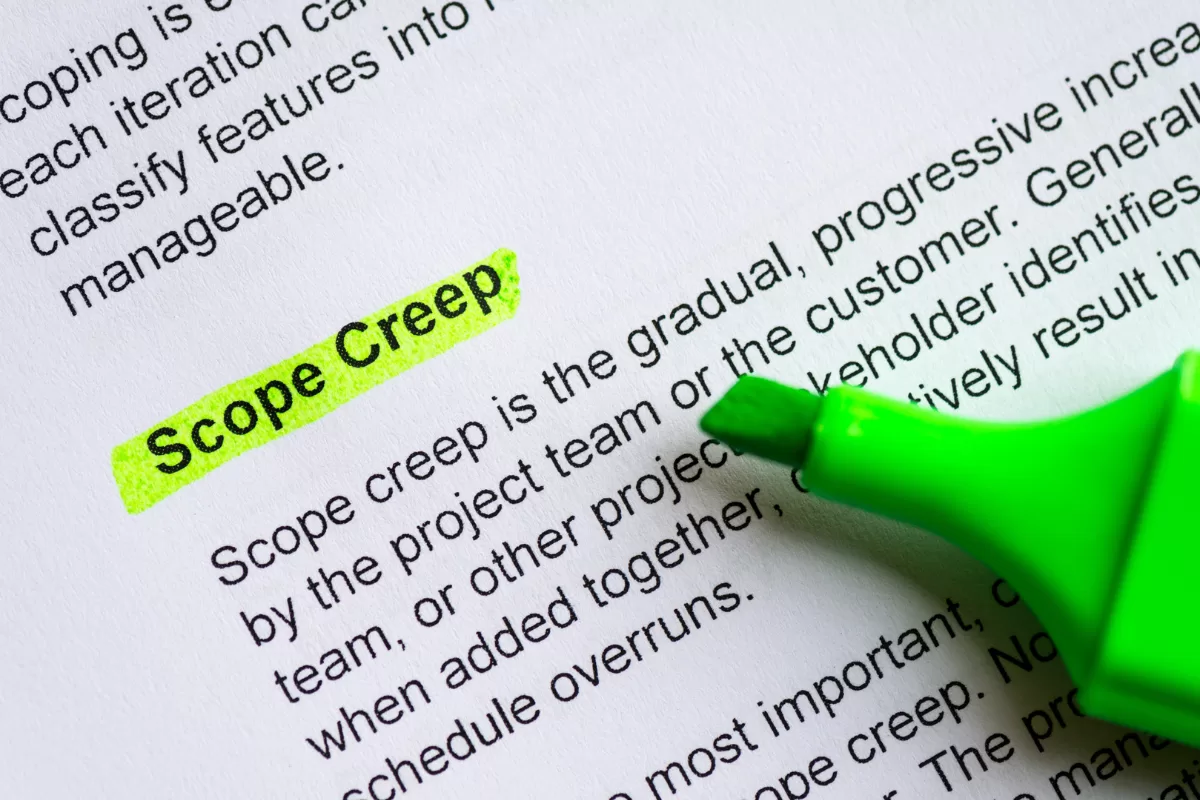
Scope creep is when the project scope grows uncontrollably, without corresponding adjustments to the timeline, budget, or resources. It sounds technical, and it is. It happens when small change requests accumulate without anyone noticing their real impact on the project as a whole.
As an example, consider the following scenario. You’re developing an inventory management system and, during a meeting, someone suggests adding an integration with the sales system. Sounds reasonable, after all the areas talk to each other. The problem is that this “small addition” can mean weeks of extra development, additional testing, changes to the database architecture, and adjustments to other features that were already done.
Unlike legitimate changes — those that go through a formal process of evaluation, approval, and resource adjustment — scope creep happens informally. These are requests that come up in hallway conversations, casual emails, or comments in status meetings.
It’s especially common in software development projects because the nature of the work is more abstract. Unlike a construction project, where everyone can see that adding one more room changes the entire project, in software development the changes are harder to see.
Signs that scope creep is taking over your project
How do you know if your project is getting out of control? Some signs are pretty clear:

- Deadlines that keep getting postponed. That delivery that was supposed to be Friday became Monday, then became “next week,” and now no one dares to give a date anymore.
- Budget overruns without explanation. You started with an approved amount, and suddenly you’re asking for more funding for the third time. When someone questions it, it’s hard to justify exactly where the money went.
- Overworked team. Developers don’t know what’s priority anymore. Everyone is working hard, fixing rework, and improvising solutions.
- Stakeholders asking for “just one more little thing.” Each request, one by one, seems small, but the sum of them can mean double the original work.
- Lack of clarity about what’s priority. When everything is urgent, nothing is urgent. The team wastes time trying to guess what really matters.
Why is scope creep so dangerous?
Let’s look at the numbers, because they’re scary. A study by IEEE Access revealed that 50% to 60% of software projects end in partial or total failure each year, and scope creep is listed as one of the most common factors for this. In another survey, 92% of managers interviewed stated that their projects failed due to lack of scope creep management, according to data from Monday on project management.
Beyond the direct financial impact, scope creep wears down the team. Developers become demotivated when they realize the work never ends, that the deadline they promised became a joke, and that code quality is compromised because everything became urgent. The IT team’s credibility within the company also suffers, for never delivering on time.

The main causes of scope creep
Understanding why this happens is the first step to avoiding it. The most common causes are:
- Lack of initial planning. When the project starts in a rush, without time to think through everything that needs to be done, it’s almost certain the scope will change.
- Vague scope documentation. Scope needs to detail functionalities, integrations, business rules, technical limitations. Without this, each person understands something different.
- Failed communication between stakeholders and technical team. The client talks about a “management report” thinking of an interactive dashboard with 15 different charts. The developer understands an Excel-exportable table.
- Absence of a formal process for changes. There needs to be a workflow: request, impact analysis, approval, resource adjustment.
How to prevent scope creep before it starts
It all starts in the planning phase. Dedicate time to document the scope in detail. This means listing all functionalities, specifying integrations, defining business rules, establishing technical requirements and, just as important, making clear what is not included in the project.
Expectation alignment needs to happen from day one. Client, technical team, stakeholders, management need to be looking at the same document and understanding the same thing. Kickoff meetings aren’t formalities, they’re the moment to ensure everyone knows exactly what will be delivered.
Define a clear process for change requests. This is protection for the project. The workflow can be simple: any change needs to be documented, analyzed for impact (time, cost, resources), formally approved, and incorporated into the plan with the necessary adjustments.


The difference that well-planned scope makes
Projects with well-defined scope are a different reality. The team knows exactly what needs to be done, stakeholders have realistic expectations, and the IT manager is calm knowing the project is under control.
When everyone is aligned from the beginning, surprises decrease dramatically. Of course unexpected issues happen, technology is like that, but dealing with a real unexpected issue is very different from dealing with the mess caused by lack of planning.
Teams that work with clear scope are more productive. They don’t waste time trying to guess what needs to be done, they don’t have rework, and they don’t wear themselves out with constant direction changes.
NextAge understands that this planning phase is where most projects get lost. That’s why we created referential scope as a service focused precisely on preventing scope creep from happening. It’s investing more time at the beginning to bring more predictability.
How to end scope creep?
Scope creep is not inevitable. It’s a consequence of choices, or the lack of them. Skipping the planning phase, accepting changes without evaluating impact, not documenting scope, avoiding difficult conversations about priorities. All of this contributes to the project getting out of control.
The good news is you can reverse this. Start treating planning with the attention it deserves. Establish clear processes for changes. Document everything. And especially, work with partners who understand that software development isn’t just writing code, it’s planning, executing, and delivering with predictability.
If you’re tired of seeing your projects blow deadlines and budgets, maybe it’s time to rethink how you develop them. NextAge is ready to help you build projects that actually finish, with the referential scope service that brings the predictability every IT manager needs.
Want to know how to avoid scope creep in your next projects? Learn about NextAge’s adaptative scope and discover how software development can be, yes, predictable.